Intro

Remote work sounded like a dream a few years back. No commute, no office noise, work from your bed if you want to. But if you have ever managed or worked on a remote marketing or SEO team, you know the reality is a bit more complicated.
SEO and marketing work is not the kind of job where you finish a task and move on. It is ongoing. Rankings shift, algorithms update, clients want reports, content calendars need filling, and outreach campaigns take weeks to show results. When your team is spread across cities or even countries, keeping everyone motivated and energized becomes a real challenge.
So how do successful remote marketing and SEO teams manage to stay driven without burning out halfway through the year? Let us break it down.
Why Remote SEO and Marketing Teams Burn Out Faster Than Others
Burnout in this field is not always about working too many hours. Sometimes it comes from something quieter, like doing the same repetitive tasks day after day without seeing quick wins.
Think about it. A content writer might spend three weeks on a piece that takes six months to rank. A link builder might send fifty outreach emails and get two replies. An SEO analyst might spend a whole afternoon staring at a Google Search Console dashboard trying to figure out why traffic dropped for no clear reason.
None of this gives instant satisfaction. And when you are working from home, without a manager walking by to say "good job" or a colleague high-fiving you after a win, that lack of feedback starts to weigh on people.
The All-in-One Platform for Effective SEO
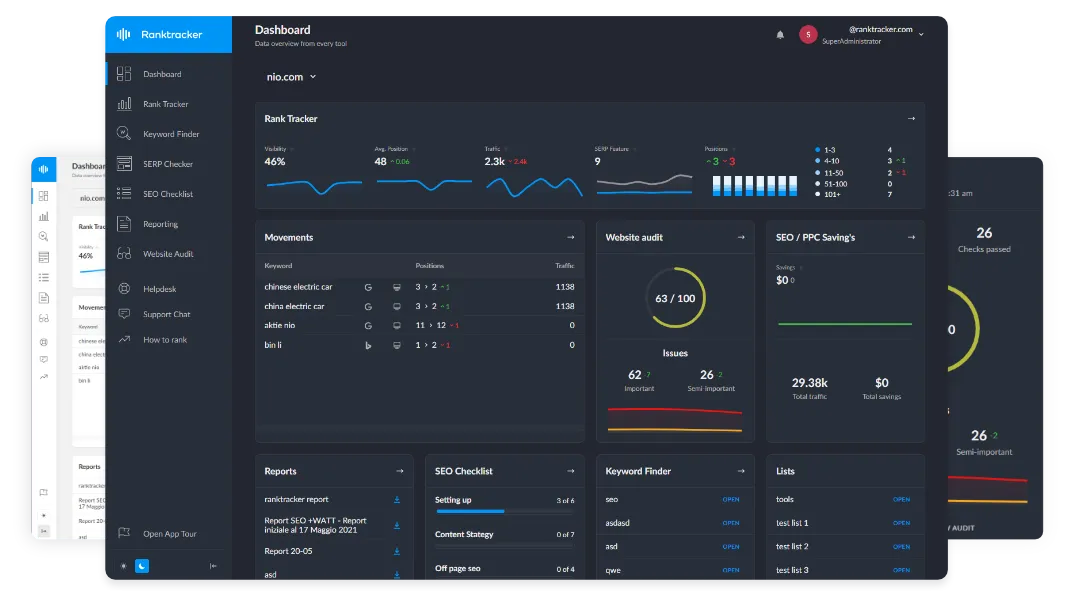
Behind every successful business is a strong SEO campaign. But with countless optimization tools and techniques out there to choose from, it can be hard to know where to start. Well, fear no more, cause I've got just the thing to help. Presenting the Ranktracker all-in-one platform for effective SEO
We have finally opened registration to Ranktracker absolutely free!
Create a free accountOr Sign in using your credentials
A few other reasons remote SEO and marketing folks tend to burn out:
- Constant algorithm changes that make yesterday's strategy useless today
- Client pressure for fast results in a field that is naturally slow
- Blurred lines between work hours and personal time
- Isolation from not having a physical team around
- Too many tools and dashboards to check every single day
Start With Realistic Expectations, Not Hustle Culture
One of the biggest mistakes teams make is trying to mirror office intensity while working remotely. They set up strict nine to six hours, back to back meetings, and expect the same output as an in-house team sitting together.
This does not work well for SEO and content work. This kind of work needs deep focus, and deep focus does not happen in fragmented chunks between Slack pings and Zoom calls.
Teams that manage to stay motivated long term usually do a few things differently:
- They set weekly goals instead of daily micromanagement
- They allow flexible hours as long as deadlines are met
- They protect a few hours each day for uninterrupted, focused work
- They avoid scheduling calls first thing in the morning or right before end of day
When people feel trusted to manage their own time, they tend to put in more effort, not less. That's why trust is one of the first things to get right when you build a remote SEO team from scratch.
Make Small Wins Visible

SEO results take time. That is just how the work is. But if your whole team only celebrates the big wins, like a client jumping to page one after eight months, everyone will feel like nothing is happening in between.
There is a good bit of research on why this actually matters. Feeling appreciated at work is closely tied to lower stress and better mental health overall, not just a nice feeling in the moment. Studies show that employee recognition improves employee wellbeing, and this holds especially true in remote setups where people rarely get a pat on the back in person. If your team is scattered across time zones, a little intentional appreciation goes a much longer way than most managers realize.
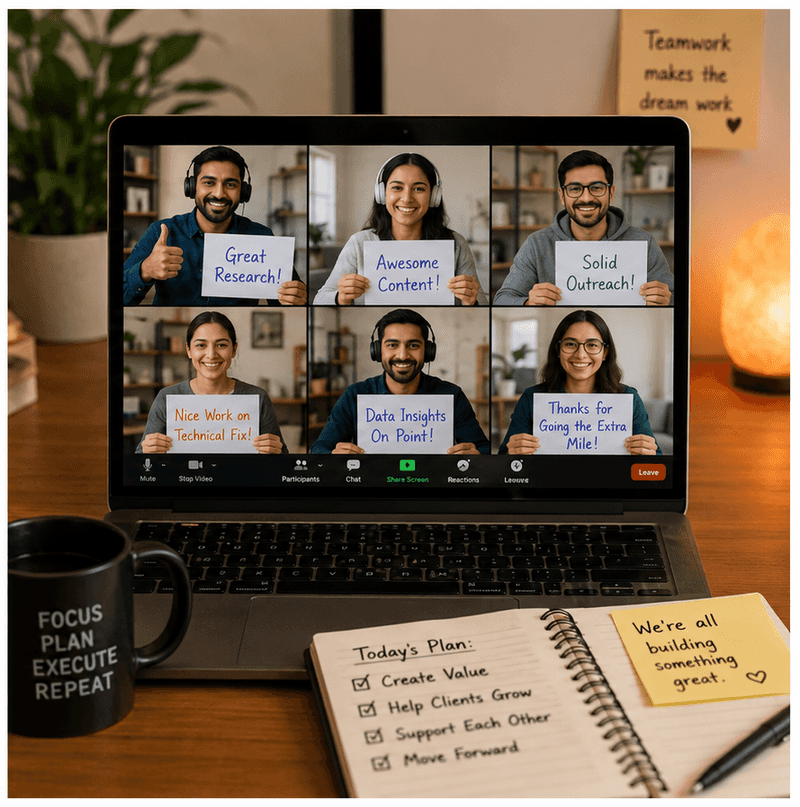
Smart teams break the journey into smaller, visible milestones. A guest post got approved? Mention it in the team channel. A tricky technical SEO issue got fixed? Share it. A client replied with a thank you note? Post a screenshot. None of this needs a big production. Even a one line message in the group chat is enough to remind someone that their work is actually being noticed.
The All-in-One Platform for Effective SEO
Behind every successful business is a strong SEO campaign. But with countless optimization tools and techniques out there to choose from, it can be hard to know where to start. Well, fear no more, cause I've got just the thing to help. Presenting the Ranktracker all-in-one platform for effective SEO
We have finally opened registration to Ranktracker absolutely free!
Create a free accountOr Sign in using your credentials
This does not need to be a formal process either. A quick message in Slack saying "hey, nice work on that outreach pitch, the reply rate this week has been solid" can genuinely change someone's mood for the day. And unlike a scheduled monthly review, this kind of feedback lands while the work is still fresh in the person's mind, which makes it hit differently.
Managers sometimes worry that praising small things too often will make it feel less meaningful. In practice, the opposite tends to happen. People do not get tired of hearing that their work matters. What tires them out is silence, followed by a sudden complaint the one time something goes wrong.
Rethink How Meetings Happen
Remote teams often overcorrect on communication. They end up in back to back calls just to feel connected, which ironically leaves less time for actual work and adds to the fatigue.
A few things that help SEO and marketing teams cut down on meeting overload:
- Replace status update calls with a written daily standup in Slack or Notion
- Keep strategy calls to once or twice a week, not daily
- Record important calls so people in different time zones are not forced to attend live
- Use async video tools like Loom for explanations instead of scheduling a meeting
The goal is not zero meetings. It is making sure every meeting earns its place on the calendar. The right set of tools for collaborating with a remote SEO team makes that discipline easy to maintain, without adding extra overhead.
Give People Room to Own Their Work
Nobody feels motivated doing tasks that feel completely dictated from above. SEO and marketing especially benefit from a bit of creative freedom, since so much of the work involves testing ideas and seeing what sticks.
Letting a content writer pick their own angle for a blog post, or letting a link builder decide which outreach tone works best for their assigned niche, builds a sense of ownership. People care more about work they helped shape.
This also reduces the mental load on managers, since team members start solving small problems on their own instead of escalating every little decision.
Watch for the Warning Signs Early
Burnout rarely shows up overnight. It builds slowly, and in remote settings it is easier to miss because you are not physically seeing the person's tired eyes or hearing the frustration in their voice during a hallway chat.
The All-in-One Platform for Effective SEO
Behind every successful business is a strong SEO campaign. But with countless optimization tools and techniques out there to choose from, it can be hard to know where to start. Well, fear no more, cause I've got just the thing to help. Presenting the Ranktracker all-in-one platform for effective SEO
We have finally opened registration to Ranktracker absolutely free!
Create a free accountOr Sign in using your credentials
Some signs to watch for in a remote SEO or marketing team member:
- Slower response times than usual, even for simple messages
- Quality of work dipping without any explanation
- Going quiet in team calls or contributing less in discussions
- Taking longer breaks or logging in later than their usual pattern
- Complaining more often about tasks they used to handle without issue
If a manager notices two or three of these signs together, it is worth reaching out directly, not through a formal review, but just a simple check-in message asking how things are going. Catching this early is a big part of what it actually means to manage an SEO team effectively, long before it turns into a bigger problem.
Build in Actual Rest, Not Just Time Off
There is a difference between having time off and actually resting. A lot of remote workers take a day off and spend half of it checking Slack anyway, just out of habit or guilt.
Teams that handle this well tend to:
- Set clear rules around not messaging outside work hours unless truly urgent
- Encourage people to fully log out during their leave, including muting notifications
- Rotate who covers urgent client matters so one person is not always on call
- Normalize taking short breaks during the day instead of powering through eight hours straight
Rest that is constantly interrupted by notifications does not actually recharge anyone. Teams need to protect this boundary seriously, not just mention it in an onboarding document and forget about it.
Keep the Human Connection Alive
Marketing and SEO work can feel very transactional when everything happens through Slack messages and shared documents. Adding small human touches back into the routine makes a real difference.
Some ideas that remote teams actually enjoy:
- A weekly non-work channel for sharing memes, weekend plans, or random thoughts
- Occasional virtual coffee chats that are not about work at all
- Celebrating birthdays or work anniversaries, even with something as simple as a GIF and a message
- Sharing personal wins outside of work too, like finishing a book or trying a new recipe
These small moments build trust between teammates, and trust makes it easier to ask for help when someone is overwhelmed instead of quietly struggling through it.
Final Thoughts
Remote marketing and SEO teams do not need fancy perks or expensive wellness programs to stay motivated. What actually works is simpler than that. Clear expectations, visible appreciation, room to breathe, and genuine human connection go a long way in a field that is naturally slow moving and can feel thankless at times.
Burnout does not happen because people are lazy or weak. It happens when effort goes unnoticed for too long and rest keeps getting pushed aside. Fix those two things, and most remote teams find their own rhythm again, without needing to burn the candle at both ends to get results.