Intro
If you’re only tracking desktop rankings in 2025, you’re missing the bigger picture—and potentially missing your audience. With more than 60% of all Google searches now happening on mobile devices, mobile rank tracking is no longer optional—it’s critical.
Whether you’re running an SEO campaign for a local service, an e-commerce store, or a global brand, your rankings on mobile can differ dramatically from desktop. That’s why Ranktracker delivers precise mobile rank tracking that gives you real-time visibility into how your keywords perform on smartphones and tablets.
In this guide, we’ll explore why mobile-specific SEO tracking matters, what to look for in a tracking tool, and how Ranktracker helps you succeed in a mobile-first world.
What Is Mobile Rank Tracking?
Mobile rank tracking is the process of monitoring how your website and keywords rank in search engine results on mobile devices. Unlike desktop rankings, mobile rankings are influenced by factors like page speed, mobile usability, and local relevance.
A dedicated mobile tracking tool helps you:
-
Track keyword performance across Google mobile results
-
Identify differences between desktop and mobile SERPs
-
Optimize for mobile-first indexing (now standard in Google)
-
Understand how user experience impacts mobile SEO performance
Why Mobile Rankings Are Different—and Why They Matter
Search engines now prioritize mobile-first indexing, meaning your mobile site—not your desktop version—is the primary version Google evaluates. And since mobile search intent is often different from desktop, keyword rankings can vary.
Here’s why mobile rank tracking is essential:
📱 1. Google’s Mobile-First Indexing
Your mobile version is what Google crawls and ranks. If your content performs poorly on mobile, your SEO rankings could suffer across all platforms.
📍 2. Local SEO Is Mobile SEO
Mobile users are more likely to perform location-based searches (e.g., “near me”). If you’re not tracking local keyword positions on mobile, you’re missing crucial data.
⚠️ 3. SERP Features Differ on Mobile
Mobile SERPs often show different layouts, with:
-
Larger featured snippets
-
More local map packs
-
Fewer traditional links above the fold
This can dramatically change how visible your content is.
📉 4. User Behavior Is Different
Slow-loading pages, intrusive pop-ups, or poor mobile design can lead to higher bounce rates and lower mobile rankings. Tracking lets you measure the impact.
What to Look for in a Mobile Rank Tracking Tool
Not all rank trackers offer true mobile tracking. Here’s what matters:
| Feature | Why It’s Important |
| Separate mobile vs desktop tracking | Understand performance on each platform |
| Daily updates | Mobile rankings can change quickly |
| Geo-targeted tracking | Crucial for local SEO and location-specific mobile searches |
| Device simulation | See how rankings appear on mobile screens |
| Competitor tracking | Benchmark your mobile visibility vs others |
| SERP feature tracking | Monitor if you’re appearing in snippets, map packs, etc. |
Why Ranktracker Is the Best Mobile Rank Tracking Solution
Ranktracker offers mobile-first rank tracking with unmatched precision, allowing you to see how your content performs across mobile devices, search engines, and locations.
Here’s how Ranktracker gives you a competitive edge:
✅ 1. Mobile-Specific Keyword Tracking
Track your rankings on Google mobile search results across all your target keywords. Easily compare with desktop rankings to uncover optimization opportunities.
📍 2. Hyper-Accurate Local Tracking
Whether you're targeting a specific city, state, or country, Ranktracker gives you geo-specific mobile rankings—perfect for local SEO campaigns.
📊 3. Side-by-Side Device Comparisons
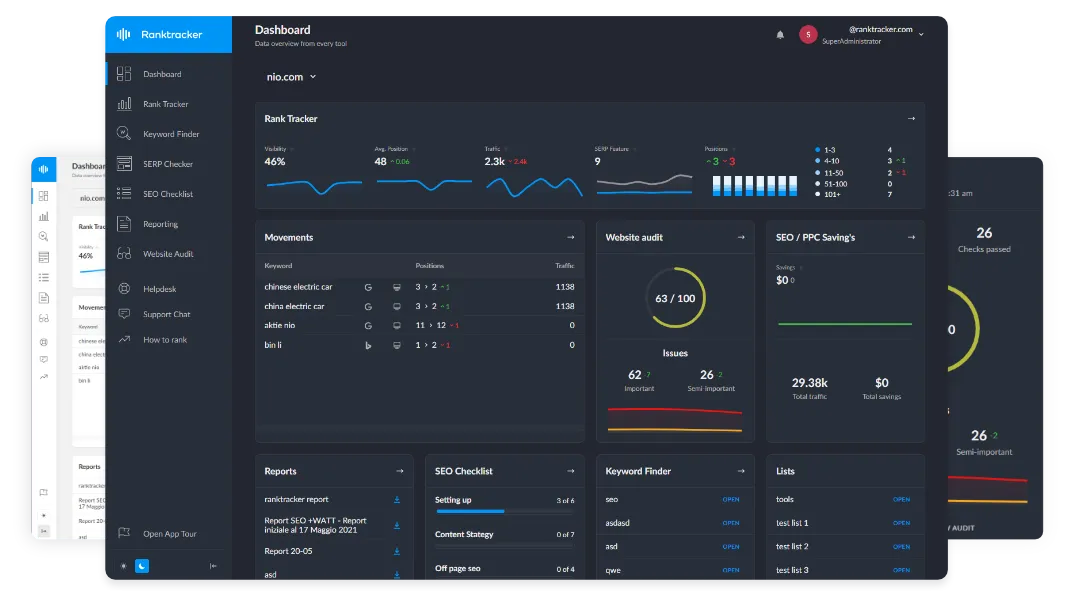
Quickly view and compare how your keywords perform on mobile vs desktop with intuitive dashboards and charts.
⚔️ 4. Mobile Competitor Monitoring
Add your competitors and see how their mobile rankings stack up against yours. Find gaps, trends, and areas to outperform.
🧰 5. Integrated SEO Tools Included
With Ranktracker, you don’t just get mobile tracking—you also get:
-
Keyword Finder to discover new opportunities
-
SERP Checker for keyword difficulty analysis
-
Backlink Monitor to track link influence on rankings
-
AI Article Writer to help create mobile-friendly SEO content
-
Web Audit Tool to uncover mobile usability issues
Who Needs Mobile Rank Tracking?
Anyone targeting search traffic in today’s mobile-first landscape. That includes:
-
SEO agencies managing multi-device campaigns
-
Local businesses relying on mobile search visibility
-
E-commerce brands optimizing for mobile shopping behavior
-
Content marketers tailoring posts to mobile audiences
-
Freelancers and consultants proving mobile performance to clients
How to Start Mobile Rank Tracking with Ranktracker
-
Sign up at Ranktracker.com
-
Add your website and keywords
-
Select “Mobile” as your tracking device
-
Set your preferred location (city, state, or country)
-
Get daily mobile ranking updates, reports, and insights
Final Thoughts: Mobile SEO Needs Mobile Data
As mobile becomes the primary way people search, your success in SEO depends on what happens on smaller screens. Mobile rank tracking gives you the insights to optimize faster, rank higher, and deliver better user experiences.
The All-in-One Platform for Effective SEO
Behind every successful business is a strong SEO campaign. But with countless optimization tools and techniques out there to choose from, it can be hard to know where to start. Well, fear no more, cause I've got just the thing to help. Presenting the Ranktracker all-in-one platform for effective SEO
We have finally opened registration to Ranktracker absolutely free!
Create a free accountOr Sign in using your credentials
With Ranktracker, you get accurate, daily mobile rankings—plus the full SEO toolkit to help you act on them.