Intro
Two years ago, most marketing teams were still asking whether an AI assistant could write a decent paragraph. That question feels almost quaint now. The real question teams are asking today is different: can we actually trust this thing with our workflows, campaign planning, customer data, reporting, or is it still just a fancy autocomplete?
The honest answer is: it depends entirely on how you use it. Claude, the AI assistant built by Anthropic, has become one of the models businesses reach for when they want something more than a chatbot novelty. But the interesting part isn't the model. It's watching how ordinary marketing and operations teams have figured out where it actually helps and where it just gets in the way.
Where it earns its keep
A lot of teams make the same mistake early on, they treat an AI assistant like a search engine with better manners. That's not where the value is. The value shows up in the unglamorous repetitive stuff that quietly eats a week.
Take a campaign copy. Someone on a marketing team is often stuck writing eight or ten variations of the same ad for different audience segments, same message, different angle, over and over. An assistant can knock those out in minutes. That frees up the person to do the part that actually matters: deciding which version is right, not typing all of them.
Meetings are another obvious one. Sales and marketing teams live in calls and most of what's said in them disappears the moment the call ends. An assistant that can summarize the conversation, pull out the three things someone actually needs to follow up on, and draft that follow-up email saves real hours and more importantly stops things from falling through the cracks.
Then there's the pile of feedback nobody wants to touch. Customer surveys, support tickets, app reviews, most of it sits unread because reading through a thousand rows of a spreadsheet isn't anyone's idea of a good afternoon. An assistant can cluster the recurring complaints and hand back something a person can actually act on.
And internal knowledge, every company has a graveyard of old docs, past campaign notes, internal wikis that are technically searchable but nobody ever searches. Being able to ask "how did we handle this last time" and get a real answer turns that dead archive into something worth having.
Where teams get stuck
Here's the part that trips people up. Plenty of teams adopt the tool and never rethink the workflow around it. They just add an assistant on top of the same process and it becomes one more app to check rather than something that actually changes how work moves.
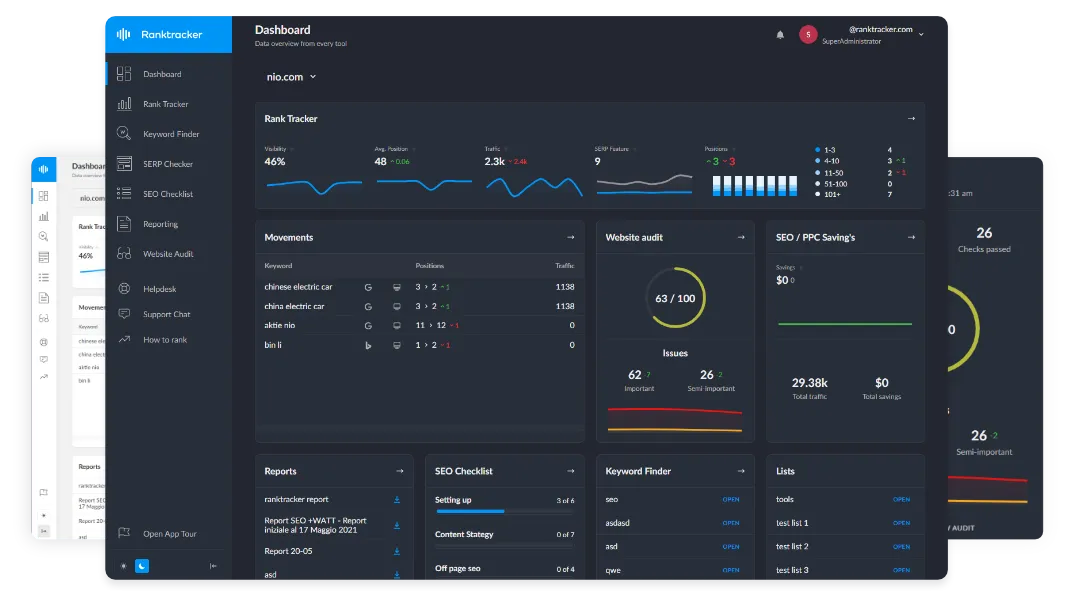
The All-in-One Platform for Effective SEO
Behind every successful business is a strong SEO campaign. But with countless optimization tools and techniques out there to choose from, it can be hard to know where to start. Well, fear no more, cause I've got just the thing to help. Presenting the Ranktracker all-in-one platform for effective SEO
We have finally opened registration to Ranktracker absolutely free!
Create a free accountOr Sign in using your credentials
The teams that get this right tend to do a few things on purpose. They decide early which tasks the assistant owns, first drafts, summaries, tagging feedback, and which stay with a person, especially anything customer-facing or strategic. Leaving that line fuzzy is usually where quality slips.
They also build in a review step instead of assuming the first draft is good enough. Even a strong assistant benefits from someone checking its output against real customer data and the brand's actual voice, not the generic voice it defaults to.
And maybe most importantly, they treat this as a change to how the team works, not just a new piece of software. The teams that struggle are usually the ones hoping the assistant will fix a broken process on its own. It won't. It just makes whatever process you already have faster, good or bad.
When it's worth bringing in help
Some teams get to a workable setup just by experimenting on their own, using an assistant for scattered individual tasks as they come up. Others reach a point where they want it actually built into their systems: CRM records, reporting dashboards, customer data, not just a chat window off to the side. That's a different kind of project. It's closer to systems integration than trying out a new tool, and most teams benefit from outside help the first time they attempt it.
This is usually where Claude Consulting work comes in, not to take over decisions the team should be making, but to handle the connections and guardrails, so the assistant is working inside the systems the business already runs on, instead of sitting apart from them.
The takeaway
An AI assistant isn't going to run a marketing team, and nobody should expect it to. What it's genuinely good at is soaking up the repetitive layer, drafting, summarizing, sorting through the noise, so people spend more time on the parts of the job a person actually needs to do: judgment calls, relationships, strategy.
Start small, be clear about what the assistant should and shouldn't touch, and the benefit tends to show up fast. Expect it to solve a workflow problem that was never really about the tool in the first place, and you'll probably end up disappointed, not because the AI failed, but because the problem was somewhere else all along.