Intro
For Software-as-a-Service (SaaS) companies, visibility has always depended on strong SEO — ranking feature pages, comparison content, and pricing sections. But in 2025, traditional SEO is no longer enough.
AI-powered search engines like Google’s SGE, Bing Copilot, and Perplexity.ai now synthesize information instead of displaying simple link lists. Instead of users clicking through to learn about your platform, they’re asking AI directly:
“What’s the best SEO tool for agencies?” “Does Ranktracker integrate with Google Search Console?” “How much does Ranktracker cost per month?”
If your SaaS content isn’t optimized for Answer Engine Optimization (AEO) — structured, factual, and entity-based — AI systems will pull those answers from someone else.
Let’s explore how to structure, write, and optimize your SaaS pricing, features, and integration pages so they rank in AI summaries and citations across every major search engine.
Why SaaS Companies Need AEO
SaaS platforms are data-rich — but often AI-poor.
Complex feature lists, inconsistent pricing formats, and missing schema make it difficult for answer engines to interpret your offering.
The All-in-One Platform for Effective SEO
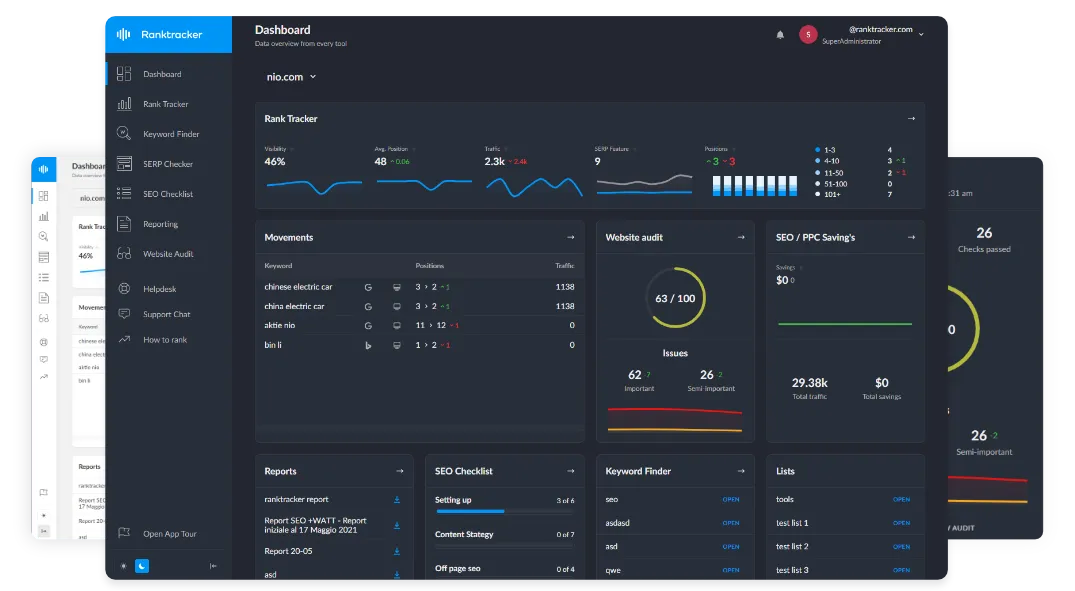
Behind every successful business is a strong SEO campaign. But with countless optimization tools and techniques out there to choose from, it can be hard to know where to start. Well, fear no more, cause I've got just the thing to help. Presenting the Ranktracker all-in-one platform for effective SEO
We have finally opened registration to Ranktracker absolutely free!
Create a free accountOr Sign in using your credentials
AEO helps AI systems understand your:
✅ Product offering — what your tool does
✅ Feature set — how it solves problems
✅ Integrations — what it connects with
✅ Pricing tiers — who it’s for and how it scales
When your content is machine-readable and factually consistent, AI answer engines can confidently reference it in their summaries, chat answers, and tool recommendations.
Step 1: Structure Feature Pages for AI Understanding
Most SaaS websites describe features in marketing language. AI systems, however, look for clear, functional explanations and structured metadata.
How to structure your feature pages:
✅ Lead with a 1-sentence definition:
“Ranktracker’s [Keyword Finder](/blog/free-keyword-rank-tracker/) is an SEO tool that helps users identify high-value search terms based on volume, difficulty, and trends.”
✅ Follow with benefit bullets (not hype):
-
Finds relevant keywords by intent
-
Supports multi-language queries
-
Integrates directly with Rank Tracker
✅ Include measurable details:
“Data updated every 24 hours using 1B+ keyword index.”
✅ Add internal linking between related tools.
The All-in-One Platform for Effective SEO
Behind every successful business is a strong SEO campaign. But with countless optimization tools and techniques out there to choose from, it can be hard to know where to start. Well, fear no more, cause I've got just the thing to help. Presenting the Ranktracker all-in-one platform for effective SEO
We have finally opened registration to Ranktracker absolutely free!
Create a free accountOr Sign in using your credentials
✅ Include Feature Schema using Product or SoftwareApplication markup.
Why it works: Answer engines scan for factual, structured, and verifiable statements — not adjectives. The cleaner your data, the higher your inclusion rate.
Step 2: Optimize Pricing Pages for Answer Extraction
Pricing is one of the most commonly searched SaaS queries — and one of the easiest to lose visibility on if AI can’t parse your data.
✅ Use a consistent pricing structure:
| Plan | Monthly Price | Annual Price | Key Features |
| Starter | $16 | $156 | Keyword tracking for small projects |
| Pro | $29 | $276 | Multi-user access, daily SERP updates |
| Business | $58 | $552 | API access, historical tracking |
| Enterprise | Custom | Custom | Dedicated success manager |
✅ Include JSON-LD Product and Offer markup:
-
price -
priceCurrency -
availability -
sku -
category
✅ Mention update cycles:
“Pricing last updated October 2025.”
✅ Add “Best for…” summaries under each plan.
Why it matters: When AI engines parse multiple SaaS pricing pages, the ones with structured data and clear tier descriptions are cited as references in AI summaries.
Ranktracker Tip: Run your pricing page through Web Audit to validate schema and check for duplicate or conflicting values.
Step 3: Map and Optimize Integrations
AI models love structured relationships — and integrations are a goldmine of entity data.
✅ Create a dedicated “Integrations” hub page listing all supported platforms (e.g., Google Analytics, Slack, HubSpot, Zapier).
✅ Use consistent formatting for each integration:
“Ranktracker integrates with Google Search Console to import keyword performance data directly into your dashboard.”
✅ Add structured markup using SoftwareApplication → applicationCategory: Integration.
✅ Link each integration to the partner’s official entity (LinkedIn, Crunchbase, Wikipedia).
Why it works: This builds semantic bridges between your SaaS brand and trusted entities — helping AI models verify your credibility and include you in multi-tool recommendations.
Step 4: Write AI-Friendly Comparison Pages
“Best X for Y” and “Tool A vs Tool B” pages are frequently cited in AI summaries.
✅ Use transparent, factual comparisons — not promotional tone.
✅ Include schema type ItemList or Comparison.
✅ Start with a 100–150-word summary that defines the differences.
✅ Include data tables (feature count, integrations, support options).
✅ Reference verified sources or customer data.
Example:
“Ranktracker and Ahrefs both offer keyword tracking and backlink monitoring, but Ranktracker includes AI content tools and a full audit suite at a lower price point.”
AI engines favor this format because it’s factual, structured, and fair, allowing them to use your data without bias.
Step 5: Create Entity Consistency Across SaaS Assets
Each SaaS feature, integration, and team member is an entity in the answer ecosystem. Ensure all are consistently represented:
✅ Add Organization schema with sameAs links to LinkedIn, Crunchbase, Product Hunt, and Wikipedia (if available).
✅ Define product relationships (isPartOf, hasPart, offers).
✅ Use consistent naming conventions (e.g., “Ranktracker Keyword Finder” not “Keyword Finder by RT”).
✅ Keep brand and product descriptions identical across all channels.
These details help answer engines connect your company, products, and tools into a single verified data graph.
Step 6: Build Trust Signals into Every Page
SaaS brands gain citations when they are trusted data sources, not just vendors.
✅ Add customer reviews and testimonials (structured with Review schema).
✅ Include recognizable logos for integrations and partners.
✅ Publish transparent case studies with data-backed results.
✅ Add team bios with credentials under “About” or “Author” schema.
AI answer engines cross-check trustworthiness using E-E-A-T factors — experience, expertise, authority, and trust.
Step 7: Use FAQ Schema to Power AI Summaries
Add FAQ sections to your pricing, features, and comparison pages with question-based subheadings:
-
“How much does Ranktracker cost per month?”
-
“Does Ranktracker integrate with Google Analytics?”
-
“Is there a free trial?”
Each answer should be:
✅ 40–80 words
✅ Factually clear
✅ Free of fluff
Add FAQPage schema to boost discoverability.
These FAQs often surface directly in Google SGE and Bing Copilot summaries — sometimes without attribution loss.
Step 8: Track Your SaaS AEO Performance
With Ranktracker, you can measure SaaS-specific AEO visibility using:
| Goal | Tool | Function |
| Check structured data | Web Audit | Ensure Product, FAQ, and Review schema validity |
| Monitor entity rankings | Rank Tracker | Compare visibility for brand and feature keywords |
| Find “AI-friendly” keywords | Keyword Finder | Identify question-style SaaS queries |
| Detect citations | Backlink Monitor | Track mentions in AI and review summaries |
| Benchmark competitors | SERP Checker | Compare your inclusion across engines |
These tools help you see where your SaaS platform appears in AI summaries — and where structured improvements can increase citation frequency.
Step 9: Keep Data Dynamic and Updated
AI engines treat outdated data as unreliable. Ensure all product and pricing data stays fresh:
✅ Auto-update pricing and plan features using CMS or API feeds.
✅ Refresh schema properties (dateModified, priceValidUntil).
✅ Add change logs for major updates.
✅ Regularly audit integration lists and remove deprecated tools.
Why it matters: AI retrievers prioritize timely data — content that changes signals active brand maintenance and current accuracy.
Step 10: Create a Unified SaaS Knowledge Layer
Combine all your AEO elements — features, pricing, integrations, FAQs — into one semantic framework.
✅ Create a structured “Product Knowledge Base” using internal linking.
✅ Organize topics logically: Features → Use Cases → Integrations → Pricing → Support.
✅ Add a sitemap.xml specifically for product and integration URLs.
✅ Interlink everything through breadcrumb and contextual links.
This unified framework feeds answer engines a complete, connected view of your ecosystem — making your SaaS the authoritative source for your category.
Final Thoughts
AEO for SaaS isn’t about rewriting your content — it’s about restructuring your knowledge.
The All-in-One Platform for Effective SEO
Behind every successful business is a strong SEO campaign. But with countless optimization tools and techniques out there to choose from, it can be hard to know where to start. Well, fear no more, cause I've got just the thing to help. Presenting the Ranktracker all-in-one platform for effective SEO
We have finally opened registration to Ranktracker absolutely free!
Create a free accountOr Sign in using your credentials
By organizing your product data, pricing, and integrations in ways machines understand, you’re teaching AI engines to recognize your platform as a trusted, citable entity.
In a world where chatbots summarize the web in seconds, the brands that succeed will be the ones whose information is the easiest to verify.
And with Ranktracker’s platform — combining Web Audit, Rank Tracker, SERP Checker, and Backlink Monitor — you can track, measure, and grow your SaaS visibility across every AI-powered search interface.
Because the next era of SaaS growth won’t be about who buys more ads — it’ll be about who gets quoted by AI.