Intro
The era of purely text-based AI is over.
Search engines, assistants, and LLM systems are rapidly evolving into multi-modal intelligence engines capable of understanding — and generating — content across every format:
✔ text
✔ images
✔ video
✔ audio
The All-in-One Platform for Effective SEO
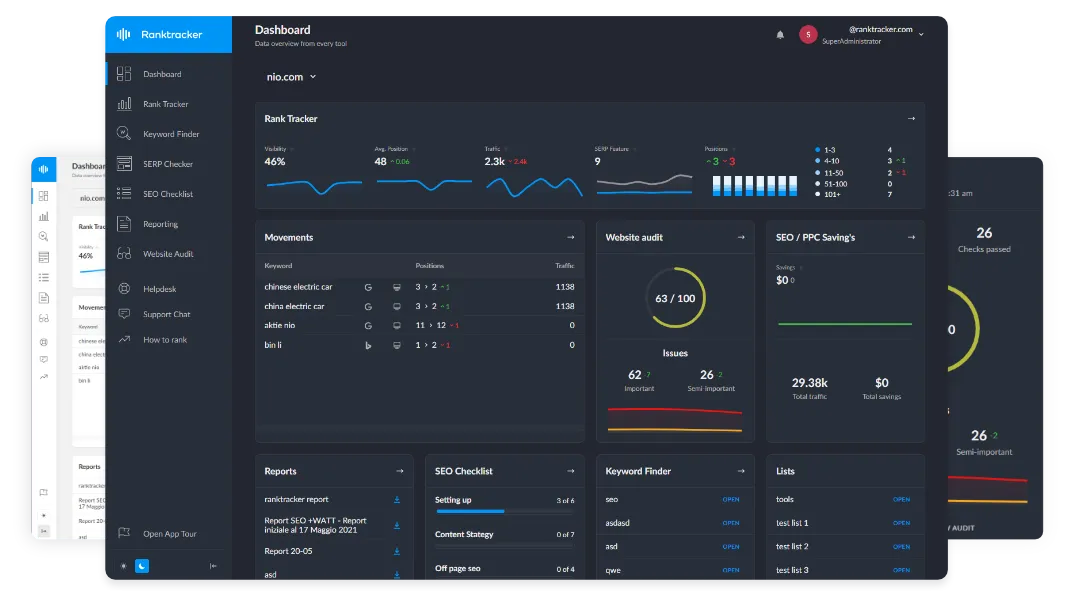
Behind every successful business is a strong SEO campaign. But with countless optimization tools and techniques out there to choose from, it can be hard to know where to start. Well, fear no more, cause I've got just the thing to help. Presenting the Ranktracker all-in-one platform for effective SEO
We have finally opened registration to Ranktracker absolutely free!
Create a free accountOr Sign in using your credentials
✔ screen recordings
✔ PDFs
✔ charts
✔ code
✔ data tables
The All-in-One Platform for Effective SEO
Behind every successful business is a strong SEO campaign. But with countless optimization tools and techniques out there to choose from, it can be hard to know where to start. Well, fear no more, cause I've got just the thing to help. Presenting the Ranktracker all-in-one platform for effective SEO
We have finally opened registration to Ranktracker absolutely free!
Create a free accountOr Sign in using your credentials
✔ real-time camera input
This shift is reshaping search, marketing, content creation, technical SEO, and user behavior faster than any previous technology wave.
Multi-modal LLMs don’t just “read” the internet — they see, hear, interpret, analyze, and reason about it.
And in 2026, multi-modality is no longer a novelty. It’s becoming the default interface of digital discovery.
This article breaks down what multi-modal LLMs are, how they work, why they matter, and how marketers and SEO professionals need to prepare for a world where users interact with AI across every media type.
1. What Are Multi-Modal LLMs? (Simple Definition)
A multi-modal LLM is an AI model that can:
✔ understand content from multiple data types
✔ reason across formats
✔ cross-reference information between them
✔ generate new content in any modality
A multi-modal model can:
— read a paragraph — analyze a chart — summarize a video — classify an image — transcribe audio — extract entities from a screenshot — generate written content — generate visuals — complete tasks involving mixed inputs
It merges perception + reasoning + generation. This makes it dramatically more powerful than text-only models.
2. How Multi-Modal LLMs Work (Technical Breakdown)
Multi-modal LLMs combine several components:
1. Uni-modal encoders
Each modality has its own encoder:
✔ text encoder (transformer)
✔ image encoder (Vision Transformer or CNN)
✔ video encoder (spatiotemporal network)
✔ audio encoder (spectrogram transformer)
✔ document encoder (layout + text extractor)
These convert media into embeddings.
2. A shared embedding space
All encoded media is projected into one unified vector space.
This allows:
✔ alignment (image ↔ text ↔ audio)
✔ cross-modal reasoning
✔ semantic comparisons
It is why models can answer:
“Explain the error in this screenshot.” “Summarize this video.” “What does this chart indicate?”
3. A reasoning engine
The LLM processes all embeddings with:
✔ attention
✔ chain-of-thought
✔ multi-step planning
✔ tool usage
✔ retrieval
This is where the intelligence happens.
4. Multi-modal decoders
The model can generate:
✔ text
✔ images
✔ video
✔ design prototypes
✔ audio
✔ code
✔ structured data
The result: LLMs that can consume and produce any form of content.
3. Why Multi-Modality Is a Breakthrough
Multi-modal LLMs solve several limitations of text-only AI.
1. They understand the real world
Text-based LLMs suffer from abstraction. Multi-modal ones literally see the world.
This improves:
✔ accuracy
✔ context
✔ grounding
✔ fact-checking
2. They can verify — not just generate
Text models can hallucinate. Image/video models validate with pixels.
“Does this product match the description?” “What error message is on this screen?” “Does this example contradict your earlier summary?”
This dramatically reduces hallucination in factual tasks.
3. They understand nuance
A text-only model cannot interpret:
✔ a graph
✔ a logo
✔ a screenshot
✔ a facial expression
✔ a UI flow
Multi-modal LLMs can.
4. They merge perception and action
Multi-modal LLMs can:
✔ analyze a website
✔ generate fixes
✔ create UX changes
✔ evaluate visuals
✔ detect technical errors
✔ create design prototypes
This blurs the boundary between “search engine,” “assistant,” and “work tool.”
5. They unlock new marketing channels
Multi-modality powers:
✔ video SEO
✔ image SEO
✔ visual brand recognition
✔ product demonstration analysis
✔ auto-generated tutorials
✔ synthetic content campaigns
The entire content ecosystem expands.
4. How Multi-Modal LLMs Will Reshape Search
Search is becoming multi-sensory.
Here’s how.
1. Search engines will interpret images as queries
Users will search by:
✔ taking a screenshot
✔ taking a photo
✔ dropping in a video
✔ showing a UI problem
✔ uploading a document
Example:
“Show me the best alternative to this tool.” Uploads screenshot of another SaaS UI.
Your brand needs multi-modal recognizability, not just keywords.
2. Video will become a primary source of search data
LLMs will:
✔ summarize videos
✔ extract entities
✔ detect topics
✔ index timestamps
✔ rank video segments
This will transform:
✔ YouTube search
✔ TikTok search
✔ video-based product discovery
If your brand isn’t multi-modal, you disappear from these indexes.
3. Image-based SEO returns with force
Models will analyze:
✔ infographics
✔ product photos
✔ chart accuracy
✔ UI clarity
✔ visual branding
✔ logos in posts
Visual SEO becomes real again.
4. Multi-modal AI Overviews
AI Overviews will start referencing:
✔ video explanations
✔ image diagrams
✔ annotated screenshots
✔ multi-modal citations
Being “indexable by text” is no longer enough.
5. Conversation-based discovery replaces SERPs
Users will:
✔ upload receipts
✔ paste invoices
✔ show analytics dashboards
✔ photograph products
✔ record problems
And ask:
“What should I do?” “What does this mean?” “Which solution fits this situation?”
Your content must be usable as a multi-modal data source.
5. What Multi-Modality Means for Marketing
This is where the revolution hits hardest.
Multi-modality enables:
1. Higher conversion through demo understanding
Models can:
✔ watch product videos
✔ understand UI flows
✔ evaluate onboarding
✔ identify friction
Marketing teams can optimize conversion flows with AI understanding semantics of video, not just text.
2. Visual brand identity becomes machine-recognizable
Your brand’s:
✔ colors
✔ typography
✔ UI
✔ icons
✔ screenshots
✔ hero images
will be indexed by visual models.
Brand identity becomes a machine entity, not just a design.
3. Multi-modal content becomes mandatory
The winning content mix:
✔ article
✔ infographic
✔ short demo video
✔ annotated screenshots
✔ data visualizations
✔ audio snippets
LLMs use all of it.
4. Product marketing becomes multi-modal
AI will compare:
✔ your UI
✔ competitor UI
✔ onboarding clarity
✔ visual trust signals
This impacts recommendation engines.
5. Customer support becomes visually automated
Users will upload:
✔ screenshots
✔ UI problems
✔ error messages
✔ device photos
LLMs will diagnose.
Brands must ensure:
✔ consistent UI
✔ recognizable patterns
✔ readable error messages
✔ clear visual hierarchy
6. Implications for SEO, AIO, GEO, and LLMO
Multi-modal models require new optimization rules.
1. LLMO → Multi-Modal LLM Optimization (M-LLMO)
Content must be:
✔ visually aligned
✔ structurally clear
✔ image-annotated
✔ video-summarizable
✔ schema-rich
✔ entity-consistent
2. AIO → Machine Interpretability Across Formats
Structured data must now describe:
✔ images
✔ videos
✔ diagrams
✔ UI sequences
Not just text.
3. GEO → Generative Engine Optimization expands
Generative engines will:
✔ pull from video
✔ read product photos
✔ extract chart meaning
✔ cross-reference formats
All content must be generatable.
4. SEO → Multi-Modal Search Optimization
Future ranking factors include:
✔ visual clarity
✔ video intent match
✔ screen readability
✔ diagram comprehension
This is a new era for content teams.
7. How Ranktracker Fits Into Multi-Modal SEO
Ranktracker becomes essential because multi-modal search engines reward:
✔ structured content
✔ strong entity signals
✔ machine-readable architecture
✔ internal linking clarity
✔ discoverable visual assets
✔ accurate metadata
Ranktracker tools support this transformation:
Keyword Finder
Identify multi-modal intent:
✔ “explain this screenshot…”
✔ “video showing how…”
✔ “diagram of…”
✔ “image of…”
SERP Checker
Shows multi-modal surfaces (video, AI Overview, image rows).
Web Audit
Ensures technical readiness for:
✔ image metadata
✔ video schema
✔ alt-text clarity
✔ visual accessibility
✔ structured data richness
Backlink Checker + Monitor
Still essential for authority — multi-modal or not.
AI Article Writer
Generates LLM- and multi-modal-friendly content structure.
Final Thought:
Multi-modal LLMs aren’t just “better models.” They are a new medium for search, discovery, and brand visibility.
In this world:
✔ text-only optimization is obsolete
✔ visual clarity is a ranking factor
✔ videos become searchable knowledge sources
✔ screenshots become search queries
✔ diagrams become machine-readable assets
✔ structured data becomes multi-format
✔ brand identity becomes an entity across modalities
The All-in-One Platform for Effective SEO
Behind every successful business is a strong SEO campaign. But with countless optimization tools and techniques out there to choose from, it can be hard to know where to start. Well, fear no more, cause I've got just the thing to help. Presenting the Ranktracker all-in-one platform for effective SEO
We have finally opened registration to Ranktracker absolutely free!
Create a free accountOr Sign in using your credentials
✔ content must be optimized for perception AND reasoning
Multi-modal LLMs will redefine SEO in the same way mobile search did — but on a much larger scale.
The future of search is not text-based. It is multi-sensory, multi-format, multi-channel, and AI-mediated.
Brands that optimize now will dominate the next generation of AI-driven discovery.