Intro
Keyword clustering boosts SEO by grouping related keywords, enabling you to rank higher with fewer pages. It increases organic traffic, builds topical authority, and reduces competition among your own pages for similar terms.
It is one of the most essential factors to improve your SEO rankings. This increases organic traffic and helps you to rank a single page on maximum keywords covering the same intent without duplication and keyword cannibalization. Instead of targeting a single keyword in isolation, you group related search terms into tight clusters around a core topic.
In simple terms: One strong pillar page + supporting cluster content = higher rankings, more traffic, and better user experience.
In this guide, I will show you exactly how keyword clustering works, why it’s so powerful in 2026, and the step-by-step process I use to turn messy keyword lists into winning SEO campaigns.
What Is Keyword Clustering?
Keyword clustering means grouping similar or related search queries together based on user intent, search volume, and topical relevance. Rather than writing separate articles for each keyword, create a single Pillar Page on the main topic and support it with focused cluster articles covering specific subtopics.
Let me give you an example, such as:
Main topic (pillar): “Best Running Shoes 2026.”
The All-in-One Platform for Effective SEO
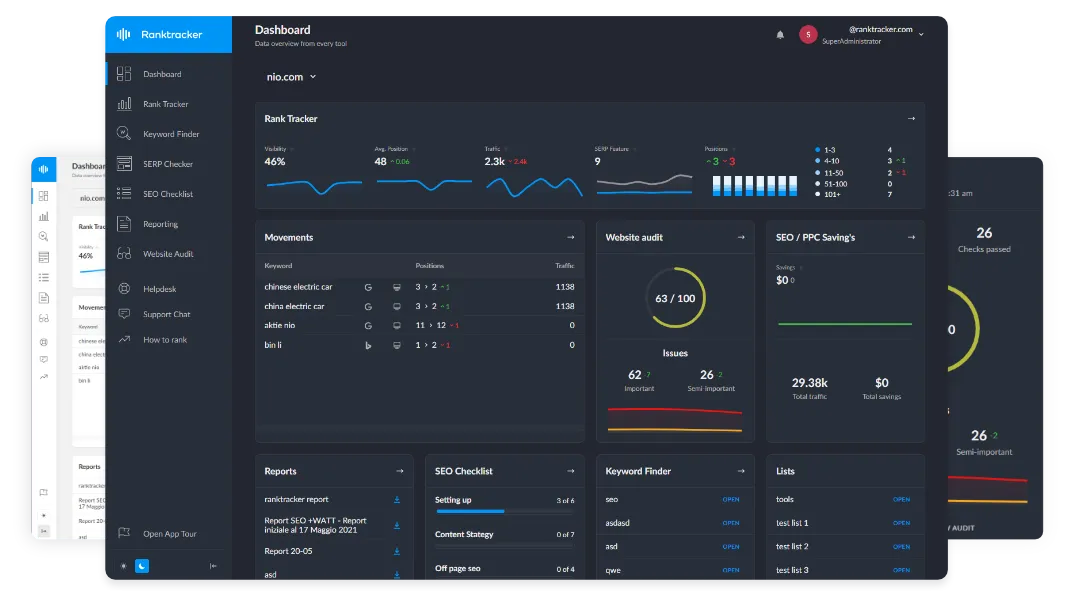
Behind every successful business is a strong SEO campaign. But with countless optimization tools and techniques out there to choose from, it can be hard to know where to start. Well, fear no more, cause I've got just the thing to help. Presenting the Ranktracker all-in-one platform for effective SEO
We have finally opened registration to Ranktracker absolutely free!
Create a free accountOr Sign in using your credentials
Cluster keywords:
- best running shoes for flat feet
- lightweight running shoes
- best trail running shoes
- running shoes under $100
- How to choose running shoes
You write one big guide for the pillar, then create shorter, deeper articles for each sub-topic, all linking back to the pillar page. Google sees your site as the go-to authority on running shoes and ranks you higher across the whole cluster.
Clustering aligns perfectly with how modern search engines evaluate content: depth, relevance, and user satisfaction over keyword stuffing.
Why Keyword Clustering Works So Well in 2026
Google’s algorithms, especially after the March 2024 Core Update and ongoing Helpful Content updates, heavily favor sites that demonstrate topical authority. As Fawad Malik, founder of NogenTech, explains in his Keyword Clustering guide, clustering aligns perfectly with how modern search engines reward depth, relevance, and topical authority. That means covering a subject comprehensively rather than having thin pages targeting one keyword each.
Benefits Of Keyword Clustering
- Higher rankings for long-tail keywords — often 70% of traffic reaches out through related searches
- Reduced keyword cannibalization — no more fighting your own pages for the same terms
- Better user experience — visitors stay longer because they find complete answers
- More internal linking opportunities — cluster pages link to the pillar, boosting its authority
- Easier content planning — you know exactly what to write next.
Clustering is now a core part of any modern SEO content strategy because it mirrors how people actually search: they start broad, then drill down with follow-up questions. When your site answers the whole journey, Google rewards you with higher positions and more featured snippets and AI overviews.
In my own projects, Keyword clustering enabled Nogentech to rank on dozens of terms within months.
How Keyword Clustering Transforms Your SEO Campaigns (Step-by-Step)
Step 1: Gather Your Seed Keywords
Start with broad terms that your audience uses and perform an in-depth keyword research. You must opt for tools such as:
- Google Keyword Planner
- Ahrefs / Semrush Keyword Explorer
- AnswerThePublic
- Google autocomplete (“running shoes” > “running shoes for beginners”, and many more)
Aim for maximum seed keywords related to your main topic.
Step 2: Group Keywords by Intent and Relevance
Sort keywords into clusters based on:
- User intent (informational, navigational, transactional)
- Similar modifiers (best, cheap, for women, reviews, vs)
- Overlapping SERP results (if the same pages rank for multiple keywords, they belong together)
Tools that automate this in 2026:
- Ahrefs Keyword Cluster tool
- Semrush Keyword Strategy Builder
- Keyword Insights
- Clustering features in SurferSEO or MarketMuse
Appropriate clusters usually have multiple keywords with similar intent and overlapping top-ranking pages.
Step 3: Build Pillar and Cluster Content Structure
- Pillar page: The comprehensive guide covering the main topic, such as “Best Running Shoes 2026” — This must include a complete set of information covering everything within its intent.
- **Cluster articles: **focused deep dives on sub-topics such as “Best Running Shoes for Flat Feet 2026,” and here, each content blog must be precise and cover that subtopic only
- Internal linking: every cluster article links back to the pillar; pillar links out to clusters
Step 4: Optimize and Publish
- Use the primary keyword in the title, H1, URL, and first paragraph.
- Add secondary keywords naturally in subheadings and body.
- Optimize images with alt text.
- Include internal links to clusters.
- Use schema markup (FAQ, HowTo, Article) for rich results.
Step 5: Monitor & Expand
Use Google Search Console + Ahrefs/Semrush to track:
- Rankings for cluster keywords
- Organic traffic growth
- Click-through rate (CTR)
- Impressions vs clicks
When a cluster starts ranking well, add more supporting articles or update the pillar with new data.
Common Mistakes to Avoid When Clustering
Common keyword clustering mistakes involve ignoring search intent, creating many small or broad clusters, and neglecting regular updates, leading to poor SEO, high bounce rates, and keyword cannibalization.
Effective clustering requires aligning keywords with SERP similarity rather than just semantic similarity.
Top Keyword Clustering Mistakes to Avoid:
- Ignoring User Intent (The "Why"): Grouping keywords based solely on similar wording rather than the actual user goal, such as informational vs. transactional, is a major error.
- Keyword Cannibalization: Creating multiple pages for the same cluster causes your pages to compete against each other, reducing overall ranking potential.
- Ignoring Long-Tail Keywords: Overlooking specific, lower-volume, long-tail phrases in favor of broad terms can result in missing high-conversion opportunities.
- Not Updating Clusters: Search intent and SERPs change; failure to refresh clusters causes them to become irrelevant over time.
- Poor Internal Linking: Not linking related cluster articles to a main pillar page weakens the topic authority of your site.
Final Thoughts: Unlock SEO Success with Keyword Clustering
As someone who has seen the impact firsthand, I can’t recommend keyword clustering enough for transforming your SEO results. By grouping related keywords and building out pillar and cluster content, you’ll boost rankings, attract more organic traffic, and establish true topical authority.
Start implementing keyword clustering today, and watch your site’s visibility and engagement soar. Remember, the key is to stay organized, align with user intent, and keep optimizing. Your SEO journey just got a lot smarter with modern Google updates.