Intro
Recruitment platforms are entering one of the biggest SEO shifts in years — because Google AI Mode is turning search into a hiring assistant.
Candidates can now ask:
- “best remote jobs for marketing”
- “how do I get hired as a data analyst?”
- “what salary should I ask for?”
- “what skills do I need for UX roles?”
And employers can ask:
- “best recruiting platform for startups”
- “how to hire developers fast”
- “ATS vs recruitment CRM”
- “best platform for sourcing candidates”
AI Mode can summarize answers, shortlist platforms, and reduce early research clicks.
So in 2026, recruitment platforms must win in two ways:
✅ become the platform AI Mode recommends ✅ convert visitors into candidates, clients, and placements fast
What Google AI Mode Changes for Recruitment Platform SEO
Traditional recruitment SEO relied on:
- job listings pages at scale
- employer pages
- career advice content
- “best hiring platform” keywords
- recruitment marketing blogs
- programmatic SEO pages (role + location)
AI Mode compresses discovery.
So users will:
- consume basic hiring advice inside Google
- click fewer listicles and generic blog posts
- make faster shortlists
- prefer the safest, most trusted platforms
This increases the “winner takes more” effect.
Recruitment Queries AI Mode Will Dominate
Recruitment platforms need to win both candidate and employer intent.
Candidate intent (application-driven)
- remote [job title] jobs
- entry level [role] jobs
- best companies hiring [role]
- [role] salary in [city]
- interview questions for [role]
Employer intent (high LTV)
- recruitment platform for startups
- best ATS for SMB
- best hiring software for [industry]
- recruitment CRM vs ATS
- candidate sourcing platform
Comparison intent (highest conversion)
- [platform] vs [platform]
- [platform] alternatives
- best alternative to LinkedIn recruiting
- best hiring sites for [role]
AI Mode will summarize these, so your pages must be “shortlist-ready.”
What AI Mode Rewards in Recruitment Platforms
AI Mode favors recruitment platforms that show:
- strong trust and legitimacy
- real job quality (low spam)
- clear value proposition (who it’s for)
- structured pages by role, industry, and location
- transparent pricing and process
- proof (case studies, results)
Thin platforms that feel like job scraping sites will lose visibility.
How Recruitment Platforms Should Optimize for AI Mode (2026 Playbook)
Here’s the approach that wins.
Build employer-focused landing pages (the money pages)
Recruitment platforms must have pages like:
- Hire Software Engineers
- Hire Sales Reps
- Hire Marketing Managers
- Hire Remote Teams
- Hire in [Country/City]
- Recruiting for Startups
- Recruiting for Enterprise
Each page should include:
- what roles you fill best
- how your process works
- typical time-to-hire
- candidate quality controls
- pricing model overview
- proof and outcomes
- CTA to book a demo / request candidates
AI Mode shortlists based on fit.
Build role + location pages for candidate intent (but keep quality high)
These pages drive traffic, but only if they’re useful:
- [role] jobs in [city]
- remote [role] jobs
- entry level [role] jobs
Include:
- job feed above the fold
- salary insights (if accurate)
- hiring companies list
- resume/interview resources
- job alerts CTA
AI Mode can summarize job advice — but not deliver a live feed.
Create comparison pages that capture high-intent buyers
These pages convert extremely well:
- [Your Platform] vs LinkedIn
- [Your Platform] vs Indeed
- [Your Platform] vs Greenhouse
- best recruiting platforms for startups
- best ATS for remote hiring
Structure:
- best for who
- strengths vs weaknesses
- workflows supported
- integrations
- pricing approach
- when to choose you
AI Mode summarizes, but buyers click to confirm.
Build trust systems (this is everything in recruitment)
Recruitment is trust-heavy.
Add:
- candidate vetting process pages
- employer verification process
- anti-scam and fraud protection pages
- compliance pages (GDPR etc.)
- clear policies
- human support info
AI Mode will avoid risky “anything goes” job platforms.
Use proof-driven case studies for both sides
Recruitment platforms should publish:
- time-to-hire reductions
- cost-per-hire improvements
- retention improvements
- quality-of-hire indicators
- client quotes from real companies
AI Mode trusts platforms with measurable outcomes.
What Recruitment Platforms Must Avoid in 2026
Avoid:
- indexing expired/low-quality job pages
- job scraping with no differentiation
- unclear pricing and process
- weak employer proof
- generic “we help you hire faster” messaging
- spam listings and scam exposure
AI Mode will filter low-trust platforms.
What Recruitment Platforms Should Track in 2026
Track business outcomes:
- employer leads from organic
- demo request conversion rate
- candidate signups from SEO
- job alert opt-ins
- placements attributed to organic
- impressions vs clicks shifts
- branded search growth
AI Mode success looks like: fewer clicks, higher-quality clients and candidates.
Final Take: Recruitment Platforms Win AI Mode by Becoming the Safest Hiring Shortcut
Google AI Mode will summarize hiring advice and shortlist platforms.
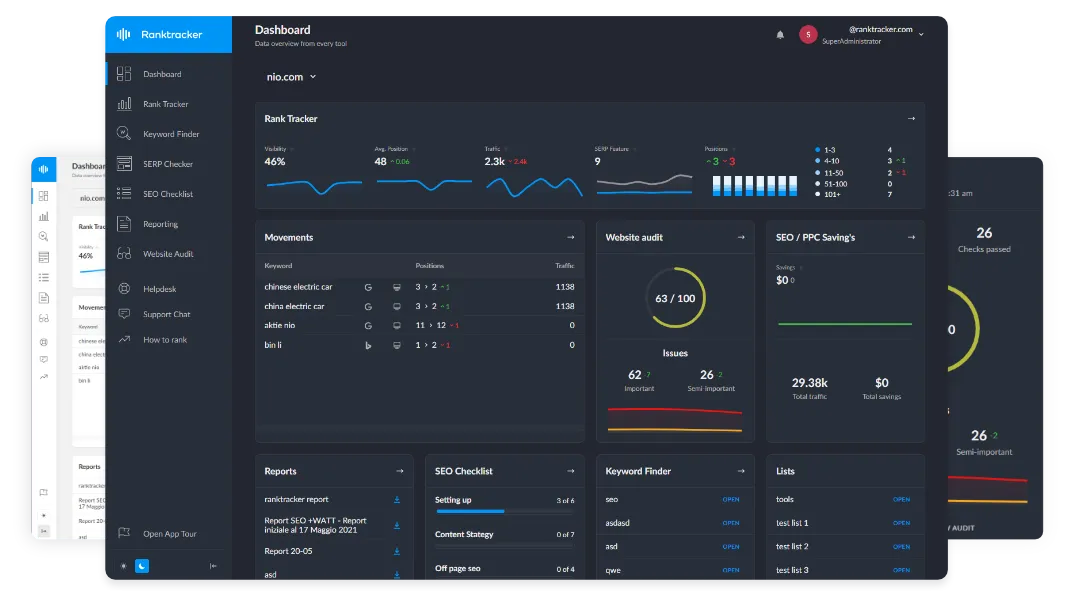
The All-in-One Platform for Effective SEO
Behind every successful business is a strong SEO campaign. But with countless optimization tools and techniques out there to choose from, it can be hard to know where to start. Well, fear no more, cause I've got just the thing to help. Presenting the Ranktracker all-in-one platform for effective SEO
We have finally opened registration to Ranktracker absolutely free!
Create a free accountOr Sign in using your credentials
But it can’t replace a recruitment platform that provides:
- vetted candidates
- trusted employers
- clean job matching
- fast hiring workflows
- strong proof and outcomes
In 2026, recruitment platforms win by building:
- employer-focused landing pages
- role/location pages with real utility
- comparison content
- trust and verification systems
- proof-driven case studies
That’s how you grow leads, placements, and revenue in an AI Mode world.