Intro
For nearly two decades, SEO has been built around one core principle: keywords. Identify what users search, optimise your pages, rank higher, and capture traffic. But in 2026, that model is changing faster than most marketers realise.
Search is no longer confined to traditional search engines. Users now discover brands through AI assistants, voice interfaces, social platforms, and conversational search tools. Instead of searching for information, they are asking questions. And instead of browsing multiple websites, they often rely on a single AI-generated answer.
This shift is forcing marketers and SEO teams to rethink how visibility works. Many forward-thinking agencies, including digitalfarm.ae, are already moving beyond traditional keyword-first approaches and focusing on broader search visibility and authority signals. Today, success isn’t just about ranking for keywords. It’s about being present wherever discovery happens.
In this article, we’ll explore how search visibility is evolving beyond Google, what this means for marketers and agencies, and how to future-proof your SEO strategy in the AI-driven search era.
The Rise of Multi-Platform Search
Search used to be simple. Users typed queries into Google and clicked through results. Today, discovery happens across multiple ecosystems:
- AI platforms like ChatGPT, Gemini, and Perplexity
- Social search on TikTok, YouTube, and LinkedIn
- Marketplace search on Amazon and ecommerce platforms
- Voice and conversational assistants
- Industry-specific platforms and knowledge hubs
According to recent industry studies, a growing percentage of younger audiences now start their discovery journey on platforms other than traditional search engines. They want instant, conversational, and contextual answers.
This creates a fragmented search landscape where brands must appear across multiple touchpoints.
For SEO professionals, this means the question is no longer: “Are we ranking on Google?”
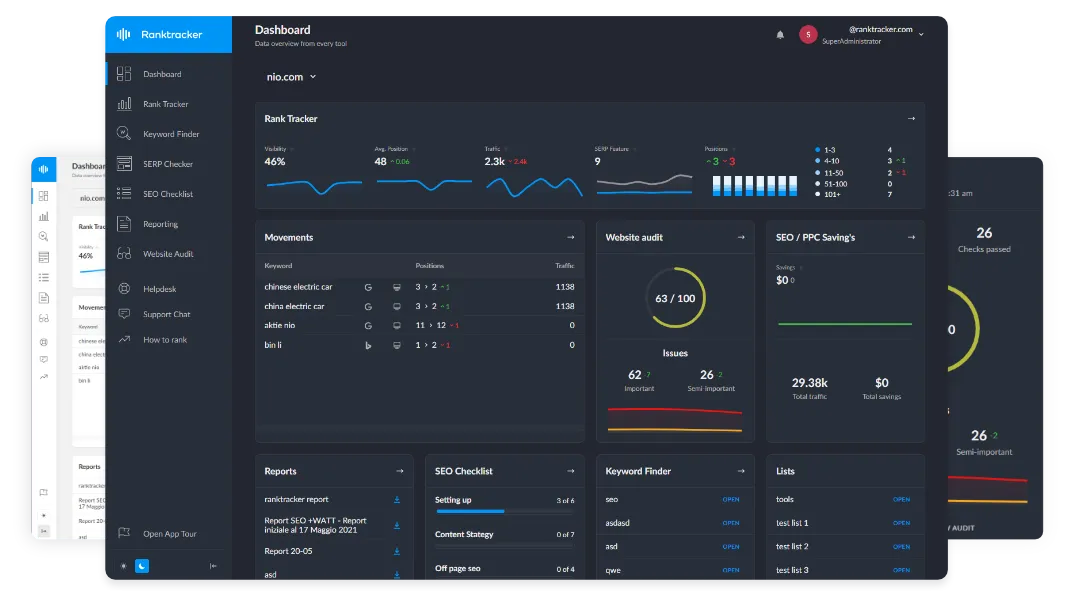
The All-in-One Platform for Effective SEO
Behind every successful business is a strong SEO campaign. But with countless optimization tools and techniques out there to choose from, it can be hard to know where to start. Well, fear no more, cause I've got just the thing to help. Presenting the Ranktracker all-in-one platform for effective SEO
We have finally opened registration to Ranktracker absolutely free!
Create a free accountOr Sign in using your credentials
Instead, it’s: “Are we visible wherever users are searching?”
Why Keywords Alone Are No Longer Enough
Keywords still matter, but they are no longer the primary driver of discovery. AI search platforms do not simply match queries with keywords. Instead, they:
- Understand context and intent
- Generate answers based on trusted sources
- Prioritise authority and credibility
- Use structured and semantic data
- Focus on entity recognition rather than exact match
This means ranking for a keyword does not guarantee visibility in AI-generated answers.
For example, a brand might rank #1 on Google but not appear in AI search responses because it lacks:
- Strong topical authority
- Clear entity signals
- High trust and reputation
- Structured knowledge
- External validation
The future of SEO is shifting from keyword optimisation to knowledge and authority optimisation.
From Keywords to Entities and Authority
Search engines and AI systems increasingly focus on entities: people, organisations, products, and concepts connected in a knowledge graph.
This evolution means brands need to build:
- Recognised digital identities
- Consistent mentions across the web
- Topical authority in their domain
- Strong brand signals
- Structured data and semantic relationships
This is why PR, digital reputation, and thought leadership are becoming critical SEO drivers.
Modern SEO teams are investing in:
- Industry partnerships
- Media placements
- Knowledge graph optimisation
- Brand authority frameworks
- Executive thought leadership
The goal is no longer just ranking pages. It’s becoming a trusted source.
The Role of AI in Shaping Search Behaviour
AI assistants are reshaping how users interact with information. Instead of searching multiple times, users ask complex questions and expect precise, summarised answers.
For example: Instead of searching “best CRM tools”, users now ask: “What CRM should a mid-size B2B company use with strong automation and integrations?”
This level of conversational search requires brands to produce:
- Deep, structured content
- Comprehensive coverage of topics
- Clear expertise signals
- Data-backed insights
- Experience-driven frameworks
Shallow, keyword-driven content is increasingly ignored.
The All-in-One Platform for Effective SEO
Behind every successful business is a strong SEO campaign. But with countless optimization tools and techniques out there to choose from, it can be hard to know where to start. Well, fear no more, cause I've got just the thing to help. Presenting the Ranktracker all-in-one platform for effective SEO
We have finally opened registration to Ranktracker absolutely free!
Create a free accountOr Sign in using your credentials
This shift rewards brands that demonstrate real expertise rather than content volume.
The New SEO Metric: Search Visibility
One of the biggest changes in modern SEO is the move from rankings to search visibility.
Search visibility measures:
- Presence across search platforms
- Brand mentions in AI answers
- Coverage across the customer journey
- Authority in key topics
- Competitive share of voice
Many advanced teams now track where their brand appears in:
- AI responses
- Featured snippets
- Knowledge panels
- Video and social search
- Voice search results
To support this approach, teams increasingly rely on advanced SEO tools for experts that go beyond keyword tracking and provide insights into authority, visibility, and competitive positioning.
This shift allows organisations to understand their true digital presence, not just rankings.
Content Strategy Is Moving Toward Topical Depth
Another major change is the move away from isolated blog posts toward structured topic ecosystems.
Instead of producing hundreds of disconnected articles, leading SEO teams are building:
- Topic hubs
- Content clusters
- Authority frameworks
- Semantic content networks
This approach improves:
- Trust signals
- Entity recognition
- AI discoverability
- Internal linking strength
- Content lifecycle management
In the AI search era, depth beats volume.
Brands that dominate a topic are more likely to be referenced by AI systems.
The Growing Importance of Trust and Credibility
AI search systems rely heavily on trusted and credible sources. This means that signals such as reputation, expertise, and accuracy are becoming central to SEO.
Key trust factors include:
- Author expertise
- Brand reputation
- Verified information
- External validation
- High-quality backlinks
- Content transparency
This aligns closely with Google’s E-E-A-T framework (Experience, Expertise, Authoritativeness, Trustworthiness).
However, these signals now extend beyond traditional search.
For example, consistent mentions in industry media, government sources, and authoritative publications significantly improve visibility in AI-generated responses.
Why Technical SEO Still Matters More Than Ever
Despite these changes, technical SEO remains foundational.
AI systems and search engines still rely on structured, accessible, and well-organised data.
Key priorities include:
- Structured data
- Schema implementation
- Crawlability
- Indexation control
- Internal linking
- Page performance
- Content architecture
Without strong technical foundations, even the most authoritative content may not be discoverable.
The All-in-One Platform for Effective SEO
Behind every successful business is a strong SEO campaign. But with countless optimization tools and techniques out there to choose from, it can be hard to know where to start. Well, fear no more, cause I've got just the thing to help. Presenting the Ranktracker all-in-one platform for effective SEO
We have finally opened registration to Ranktracker absolutely free!
Create a free accountOr Sign in using your credentials
Modern SEO is becoming a hybrid discipline combining technical, strategic, and brand-driven efforts.
How Agencies and Businesses Can Prepare for the Future
The future of SEO requires a more integrated approach across marketing, content, PR, and data.
Here are practical steps organisations can take today:
1. Build Topical Authority
Focus on owning core industry topics rather than chasing isolated keywords.
2. Invest in Brand and Reputation
Strengthen trust signals through partnerships, media, and thought leadership.
3. Develop Structured Content Ecosystems
Move from blogs to topic hubs and content frameworks.
4. Measure Visibility, Not Just Rankings
Track presence across platforms and customer touchpoints.
5. Leverage AI for Strategy and Insights
Use AI tools to uncover patterns, opportunities, and competitive gaps.
6. Align SEO With Business Goals
Connect search visibility to revenue, demand generation, and growth.
The Future Belongs to Trusted Brands
SEO is entering a new phase where authority, credibility, and visibility matter more than keywords.
While traditional optimisation techniques will remain relevant, they are no longer sufficient on their own. The brands that win will be those that:
- Demonstrate real expertise
- Build strong digital identities
- Invest in long-term authority
- Adapt to evolving search behaviour
- Focus on trust and value
Search is becoming more intelligent, conversational, and contextual. As a result, SEO is becoming less about gaming algorithms and more about building genuine expertise and credibility.
The future of SEO is not about keywords. It’s about becoming the best answer.