Intro
SEO has always rewarded relevance and authority. What’s changed is how that authority is evaluated.
In an era of AI-generated answers, zero-click searches, and answer engines summarizing the web, search engines can no longer rely solely on links, keywords, and technical signals. They need to know who to trust.
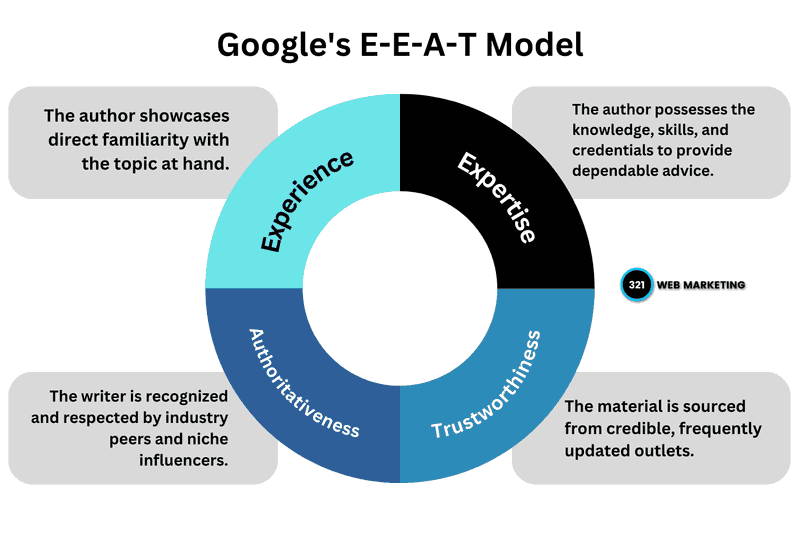
That’s why EEAT — Experience, Expertise, Authoritativeness, and Trust — has quietly become the foundation beneath modern rankings.
EEAT isn’t a new concept, but in 2026 it’s no longer a guideline. It’s a filtering system.
EEAT Is No Longer Optional
Google doesn’t rank pages — it ranks confidence in sources.
With AI Overviews synthesizing information instead of listing links, search engines must decide:
- Which sources are safe to quote
- Which explanations are reliable
- Which brands deserve visibility
This decision-making layer relies heavily on EEAT.
The All-in-One Platform for Effective SEO
Behind every successful business is a strong SEO campaign. But with countless optimization tools and techniques out there to choose from, it can be hard to know where to start. Well, fear no more, cause I've got just the thing to help. Presenting the Ranktracker all-in-one platform for effective SEO
We have finally opened registration to Ranktracker absolutely free!
Create a free accountOr Sign in using your credentials
Google uses EEAT principles to evaluate content quality at scale, especially for topics where accuracy, expertise, or real-world impact matters.
In AI-driven search, weak EEAT doesn’t just hurt rankings — it removes you from the conversation entirely.
What EEAT Actually Means in Practice
EEAT is often misunderstood as vague or unmeasurable. In reality, each component leaves clear, observable signals.
Experience
Experience answers one question: “Has this been done in the real world?”
Signals include:
- Firsthand insights
- Practical examples
- Case studies
- Demonstrated use of tools or processes
AI can summarize theory. Experience separates trusted sources from generic ones.
Expertise
Expertise is about depth and accuracy.
Search engines look for:
- Correct terminology
- Clear explanations
- Consistency across content
- Logical reasoning
Expertise doesn’t require credentials on every page — but it does require content that sounds like it knows what it’s talking about.
Authoritativeness
Authority is recognition beyond your own site.
This includes:
- Brand mentions
- Citations
- References by others
- Consistent topical association
Authority is cumulative. It builds over time through repetition and consistency.
Trust
Trust ties everything together.
Trust signals include:
- Clear ownership
- Transparent intent
- Accurate, up-to-date content
- Clean site experience
If trust is missing, the other three don’t matter.
Why EEAT Matters More in AI Search
The All-in-One Platform for Effective SEO
Behind every successful business is a strong SEO campaign. But with countless optimization tools and techniques out there to choose from, it can be hard to know where to start. Well, fear no more, cause I've got just the thing to help. Presenting the Ranktracker all-in-one platform for effective SEO
We have finally opened registration to Ranktracker absolutely free!
Create a free accountOr Sign in using your credentials
AI-generated answers amplify risk.
If an AI summarizes inaccurate or misleading content, the platform loses trust. To prevent that, AI systems prefer sources with strong EEAT signals.
This applies not only to Google Search, but also to AI answer engines like:
- ChatGPT
- Perplexity
- Gemini
All of them rely on source confidence, not just relevance.
EEAT determines:
- Who gets cited
- Who gets summarized
- Who gets ignored
EEAT vs Traditional Ranking Factors
Traditional SEO asked: “Is this page optimized?”
Modern SEO asks: “Is this source credible?”
You can still rank without perfect EEAT for low-risk topics. But for competitive, commercial, or advice-driven searches, EEAT increasingly determines how visible you’re allowed to be.
AI didn’t replace ranking signals — it prioritized trust among them.
How to Prove EEAT (Not Claim It)

The biggest mistake sites make is saying they’re experts instead of showing it.
1. Demonstrate Experience in Content
Replace generic explanations with:
- Real scenarios
- Practical outcomes
- Lessons learned
Even small experiential details improve credibility.
2. Create Consistent Topical Coverage
Expertise isn’t proven on one page.
Cover:
- Definitions
- Use cases
- Pros and cons
- Best practices
- Common mistakes
Topical consistency reinforces expertise signals across your entire domain.
3. Strengthen Brand-Level Signals
AI systems trust brands that appear consistently across contexts.
This includes:
- Repeated brand mentions
- Clear positioning
- Consistent messaging
SEO platforms like Ranktracker help teams measure brand visibility, topic coverage, and SERP presence — all indirect EEAT indicators.
4. Make Trust Obvious
Trust should never be implied — it should be visible.
This means:
- Clear authorship or ownership
- Honest positioning (no exaggerated claims)
- Updated content
- Clean UX
Trust is cumulative, but fragile.
EEAT Is Site-Wide, Not Page-Specific
One of the most overlooked aspects of EEAT is scope.
Search engines don’t evaluate EEAT in isolation. They look at:
- Patterns across content
- Consistency over time
- Alignment between pages
A few weak pages can dilute strong ones.
EEAT is a domain-level reputation, reinforced page by page.
What Happens When EEAT Is Weak
Sites with poor EEAT often experience:
- Inconsistent rankings
- Sudden drops after updates
- Low inclusion in SERP features
- Absence from AI Overviews
Not because of penalties — but because they fail trust thresholds.
The All-in-One Platform for Effective SEO
Behind every successful business is a strong SEO campaign. But with countless optimization tools and techniques out there to choose from, it can be hard to know where to start. Well, fear no more, cause I've got just the thing to help. Presenting the Ranktracker all-in-one platform for effective SEO
We have finally opened registration to Ranktracker absolutely free!
Create a free accountOr Sign in using your credentials
In AI-driven search, being “good enough” is no longer enough.
EEAT Is the New SEO Baseline
In 2026, EEAT is not an optimization tactic. It’s the minimum requirement for visibility.
Keywords get you indexed. Links get you noticed. EEAT determines whether you’re trusted enough to matter.
SEO strategies that don’t actively prove experience, expertise, authority, and trust will slowly lose relevance — even if rankings appear stable for now.
The future of search doesn’t reward the loudest sites. It rewards the most reliable ones.