Intro
Artificial intelligence is no longer an experimental tool for agencies — it’s central to service delivery, scaling output, and managing client expectations. But not all AI models fit agency workflows equally. In 2026, two of the biggest contenders for agency AI work are Claude and ChatGPT.
This comparison examines how each AI performs in agency contexts, including:
- Client deliverables
- Workflow integration
- Brand voice and consistency
- Collaboration and scalability
- SEO and technical delivery
- Risk management and reliability
The goal isn’t simply to see which writes better — it’s to determine which AI integrates more effectively into agency processes that must deliver measurable client outcomes.
Why This Comparison Matters to Agencies
Agencies face unique challenges that go beyond content generation:
- Diverse client needs: Each client has different industries, audiences, and standards.
- Brand consistency: Tone and voice must align with client identity.
- Scalable output: Agencies must deliver high volumes with predictable quality.
- Measurable results: Clients expect performance — not just content.
- Compliance and risk: Agencies work across industries with legal/safety constraints.
An AI that excels in a general context may not satisfy an agency’s structural and operational demands.
Claude vs ChatGPT: Core Differences
Claude Overview
Claude — developed by Anthropic — is a reasoning-centric AI model that emphasizes:
- Structured outputs
- Long context handling
- Consistent logical coherence
- Safety-oriented responses
Claude’s design prioritizes predictable reasoning and controlled outputs, which can be valuable when generating high-stakes copy, strategy documents, research breakdowns, and multi-part deliverables.
ChatGPT Overview
ChatGPT — powered by OpenAI’s GPT-series models — is known for:
- Versatility across content types
- Fast iteration and adaptability
- Broad ecosystem support
- Extensive prompt guidance options
ChatGPT’s ecosystem includes tools, plugins, and integrations that help agencies automate workflows, manage creative briefs, and integrate with operational tech stacks.
1. Content Quality and Brand Voice
Claude
Claude often produces more cohesive narration and measured reasoning, which is useful for:
- Long-form strategy documents
- White papers and reports
- Complex conceptual content
Agencies that need depth and analytic rigor often rely on Claude when the deliverable must read like a human-expert authored piece.
However, Claude may require stronger prompt structuring to dial in brand voice, especially for short marketing copy.
ChatGPT
ChatGPT’s strength is its adaptability in tone and style:
- Easily follows brand voice guidelines
- Handles creative and persuasive language
- Quickly adjusts to client voice briefs
For agencies producing:
- Landing pages
- Ad copy
- Social posts
- Email campaigns
ChatGPT often delivers outputs closer to client expectations with less prompt iteration.
2. Workflow Integration and Scalability
Claude
Claude’s advantage for agencies lies in:
- Large context windows — ideal for knowledge-rich briefs and multi-section content
- Consistent logical reasoning — less prone to generating contradictory sections
- Controlled outputs focused on coherence
However, integrating Claude into agency pipelines can require custom prompt frameworks and more upfront design to ensure consistent client results.
ChatGPT
ChatGPT often integrates more easily into:
- Project management tools
- Client portals
- CMS publishing workflows
- Automation pipelines (via API)
The ecosystem around GPT, including plugins and SDKs, helps agencies build repeatable workflows that reduce manual effort and scale output faster.
3. Client Collaboration and Delivery
Agencies often co-author with clients or need to share drafts for revision cycles.
Claude
- Claude’s outputs are often more structured and thoughtful, reducing back-and-forth on logic.
- However, Claude may produce text perceived as “academic” or overly cautious if not tailored.
ChatGPT
- ChatGPT’s outputs are typically creative and engaging, aligning well with client expectations for marketing language.
- It is easier to share prompt templates and revision patterns that clients can adopt.
For collaborative editing and iteration, ChatGPT’s interface and ecosystem often feel more intuitive to non-technical stakeholders.
4. SEO and Results-Driven Workflows
Neither Claude nor ChatGPT automatically guarantees search rankings. SEO success depends on how AI output is integrated with data-driven validation and tracking.
Here’s the workflow top agencies use in 2026:
- Generate draft with AI (Claude or ChatGPT) tailored to intent and structure.
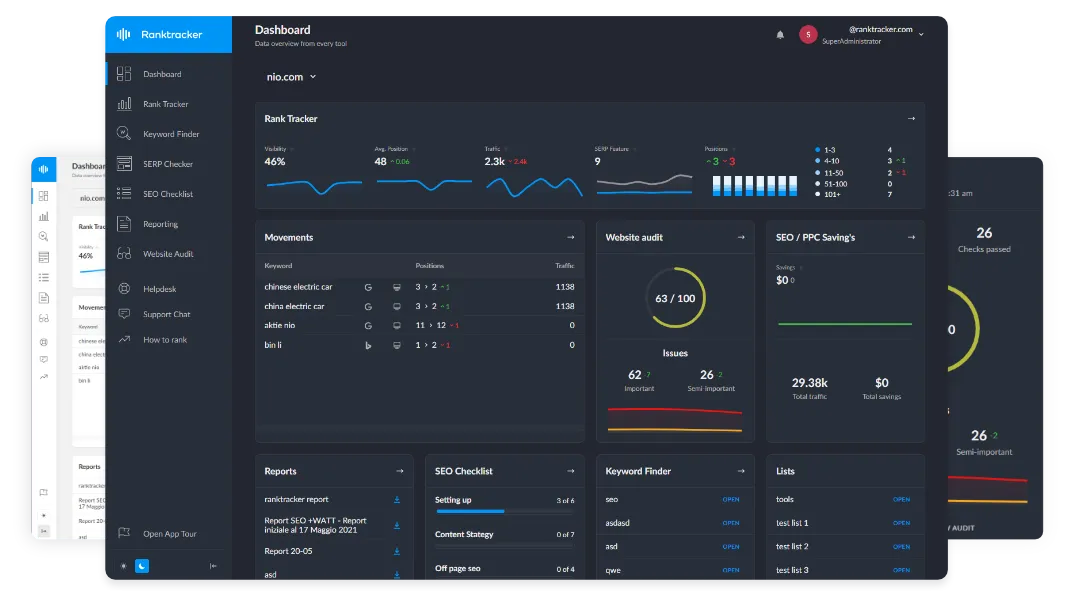
- Validate difficulty, volume, and intent in Ranktracker.
- Analyze SERP competitors for structure and entity coverage.
- Publish optimized content with on-page best practices.
- Track daily Top 100 keyword positions.
- Iterate based on performance and competitive movement.
Agency clients care about results, not drafts — and consistent ranking improvement is the performance metric that matters.
5. Reliability and Risk Management
Claude
Claude is designed with safety and controlled reasoning in mind, making it a good choice for:
- Regulated industries (health care, legal, finance)
- Content requiring risk-averse language
- Technical, detailed reports
However, Claude’s cautious style sometimes results in less dynamic language in marketing copy unless prompts are engineered well.
ChatGPT
ChatGPT is versatile but can generate:
- Confident-seeming but inaccurate claims
- Hallucinated facts if prompts lack verification
For agencies, this means QA processes must be strong — especially where accuracy matters.
However, ChatGPT’s ecosystem supports tools that help validate facts, automate revisions, and manage content governance.
6. Cost and Efficiency
Agencies evaluate AI not just by output quality but by cost per value delivered.
- Claude’s stronger reasoning and larger context support may come at higher token costs.
- ChatGPT offers tiered models and options for lighter, faster calls on common tasks.
For high-volume agency pipelines, GPT-family models often deliver better cost-efficiency for repetitive tasks, while Claude is reserved for high-impact, strategic content.
7. Best Use Cases for Agencies
Choose Claude when you need:
- Strategic long-form content
- Research synthesis and in-depth analysis
- Technical or compliance-sensitive deliverables
- Multi-section, narrative-driven content
Choose ChatGPT when you need:
- Scalable marketing copy
- Brand-aligned short and mid-form content
- Quick iterative cycles with clients
- Workflow automation and integration
Many agencies adopt a hybrid model:
- ChatGPT for high-velocity marketing and volume
- Claude for strategic, analytical, and narrative content
This hybrid approach delivers both efficiency and quality across client workflows.
Final Verdict: Which AI Is Better for Agency Workflows?
There is no single “winner.”
- ChatGPT wins in adaptability, integration, rapid iteration, and client-ready creative copy.
- Claude wins in structured reasoning, content depth, and analytical accuracy.
For agency workflows that must balance quality, scalability, and measurable results, the strongest approach integrates both tools:
- Draft with ChatGPT for brand voice and structure
- Refine with Claude for depth and logical consistency
- Validate and track performance using Ranktracker
- Iterate based on real ranking data
This combination gives agencies the best of both worlds: reliable client deliverables that perform in search.