Intro
As AI chat platforms like ChatGPT, Claude, and Perplexity reshape how consumers discover and evaluate brands, LLM tracking has become a critical component of modern marketing strategy. Understanding how your brand appears across AI-powered search experiences — including sentiment, share of voice, and source citations — now directly impacts your competitive positioning.
Profound AI entered this market as an enterprise-focused LLM tracking solution, offering brand monitoring across major AI platforms. But many marketing teams are finding that Profound AI’s extremely high pricing (often starting around $499/month), limited feature set, and lack of essential capabilities like prompt research and unified SEO context make it hard to justify the investment.
If you’re evaluating AI tracking solutions and Profound AI’s enterprise pricing doesn’t match your budget or needs, you’re in the right place. This guide covers the best Profound AI alternatives that offer more comprehensive LLM monitoring, better value, and the full visibility you need to compete in the AI search era.
Why Consider Profound AI Alternatives?
Profound AI has positioned itself as an enterprise solution for AI brand monitoring, but several factors are driving marketing teams — including agencies and performance-focused in-house teams — to explore other options.
1) Extremely high pricing for limited strategic depth
Enterprise tools can be worth it when they provide real leverage: deeper insights, richer segmentation, and clear actions your team can execute.
But for many teams, Profound AI’s pricing feels heavy relative to what they actually get:
- costs that start high even for small scopes (e.g., one brand, limited tracking)
- reporting that emphasizes dashboards over actionable optimization
- a feature set that may not fully cover prompt discovery, source patterns, or SEO integration
If you’re not an enterprise with a massive budget and a dedicated “AI visibility” function, you can often get more coverage and better workflows at a fraction of the cost.
2) Missing or limited prompt research (the “keyword research” of AI search)
In AI search, prompts are the demand layer.
It’s not enough to monitor your brand for a handful of prompts. To build an AI visibility strategy you can win consistently, you need to understand:
- which prompts trigger your brand vs competitors
- which prompt clusters represent the highest commercial intent
- how prompt language changes by persona (agency owner vs in-house head of SEO)
- how prompts shift by region, industry, and market maturity
- where your competitors dominate and why
Tools that skip prompt discovery leave your team guessing.
3) Shallow citation and source intelligence
The key question isn’t “Are we mentioned?”
It’s:
The All-in-One Platform for Effective SEO
Behind every successful business is a strong SEO campaign. But with countless optimization tools and techniques out there to choose from, it can be hard to know where to start. Well, fear no more, cause I've got just the thing to help. Presenting the Ranktracker all-in-one platform for effective SEO
We have finally opened registration to Ranktracker absolutely free!
Create a free accountOr Sign in using your credentials
What sources does AI rely on in our category, and how do we become one of them?
AI outputs are often synthesized from:
- authoritative industry guides
- ranking pages (including outside the top 3)
- frequently referenced publications and directories
- product review sites and “best tools” content
- your own content, if it is structured well enough to be used
If you can’t see:
- which domains/pages are cited repeatedly
- how those sources overlap with competitors
- which pages in your niche “own” the citations
- where content gaps exist relative to cited sources
…you can’t build a repeatable plan to displace competitors.
4) Limited “action layer” and lack of SEO integration
For performance teams, AI visibility is not separate from SEO — it is connected to:
- rankings and SERP volatility
- domain authority signals and backlinks
- topical coverage depth
- site health and crawlability
- structured content and entity clarity
- internal linking and content hierarchy
When AI monitoring lives in a separate tool from the SEO workflows that influence visibility, optimization cycles slow down and reporting fragments.
5) Sales-led friction and limited ability to test
A lot of enterprise platforms require:
- sales calls
- onboarding
- contracts
- limited self-service evaluation
That might work for large companies, but most teams want to trial and validate quickly, especially when AI search is evolving rapidly.
What the Best Profound AI Alternative Must Include
If you’re switching from Profound AI, don’t just look for “cheaper.”
Look for “better workflow and more control.”
Here are the key capabilities that matter most in 2026.
Multi-platform LLM monitoring
Your tool should track brand visibility across the AI ecosystems that shape buying decisions:
- ChatGPT
- Claude
- Perplexity
- Google AI Overviews
- Gemini (and related Google AI experiences)
Each platform has different user behavior and different sources.
If you only track one or two, you’ll build strategy on incomplete data.
Advanced prompt research and discovery
A serious alternative should support:
- prompt libraries by intent type
- clustering prompts into themes (alternatives, comparisons, best-for, pricing, migration)
- competitor mapping (who dominates which cluster)
- adding prompts at scale without huge pricing jumps
- trend tracking over time
Prompt research is where AI monitoring turns into strategic growth.
Citation and source tracking
You want to track:
- which sources are cited
- how frequently they appear
- which sources are “owned” by competitors
- recurring domains (the same sites showing up across prompt clusters)
- the pages AI uses when it compares vendors (especially “alternatives” prompts)
This is how you move from reporting to competitive strategy.
Share of voice metrics that matter
Share of voice is the KPI for AI search visibility.
But it needs depth:
- share of voice by prompt cluster
- share of voice by funnel stage
- share of voice by market and language
- share of voice versus specific competitors (not just “overall”)
This helps you prioritize what to fix first.
Sentiment and framing analysis
Basic sentiment (positive/negative) is a start.
The All-in-One Platform for Effective SEO
Behind every successful business is a strong SEO campaign. But with countless optimization tools and techniques out there to choose from, it can be hard to know where to start. Well, fear no more, cause I've got just the thing to help. Presenting the Ranktracker all-in-one platform for effective SEO
We have finally opened registration to Ranktracker absolutely free!
Create a free accountOr Sign in using your credentials
But winning teams track framing:
- how AI positions you (“best for agencies,” “too expensive,” “easy setup,” “limited features”)
- how AI positions competitors
- whether the model uses outdated claims
- whether the model misattributes features
This matters because AI answers influence perception at the decision point.
Traditional SEO integration (optional for brand teams, essential for performance teams)
If you’re building AI visibility as an acquisition channel, SEO integration is not optional.
A unified platform should connect AI presence to:
- rank tracking
- SERP features
- competitive rankings
- content opportunities
- audits and site health
- (ideally) share of voice in classic search too
Because AI visibility is often an outcome of SEO strength.
7 Best Profound AI Alternatives for LLM Tracking
Based on typical requirements for SEO teams, growth teams, and agencies in 2026, these are the strongest alternatives to Profound AI:
- Ranktracker – Best for unified AI visibility + SEO execution
- Nightwatch – Strong monitoring platform for SEO teams adding AI visibility
- Otterly AI – Focused AI visibility tool with share-of-voice framing
- Scrunch AI – Brand narrative accuracy and knowledge hub workflows
- Knowatoa AI – Brand characterization and alert-driven monitoring
- Peec AI – Lightweight monitoring (basic but simpler than enterprise tools)
- Rankscale AI – AI-focused audits and optimization diagnostics
(Keyword.com can also be relevant for some agency stacks, but the list above covers the strongest direct Profound alternatives.)
Now let’s go deeper.
1) Ranktracker (Best overall Profound AI alternative)
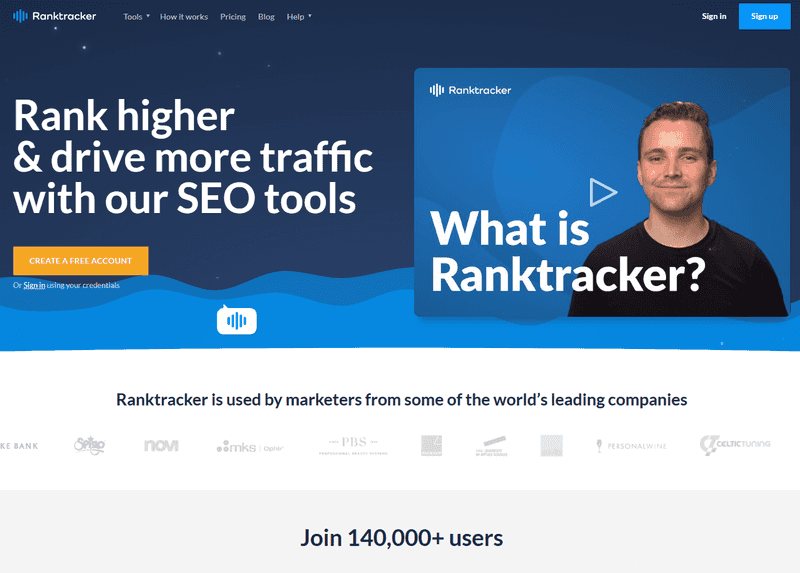
If you’re moving away from Profound AI, there’s a good chance you’re not just looking for a cheaper dashboard.
You want a platform that helps you win AI visibility — not just report on it.
Ranktracker is the best overall alternative because it connects AI visibility to the SEO levers that influence it. That means fewer tools, faster cycles, and a clearer path from insight to action.
Why Ranktracker is a strategic upgrade
Most LLM tracking tools stop at the output:
- “You were mentioned”
- “Your sentiment is neutral”
- “Your share of voice is 12%”
That’s useful, but it doesn’t tell your team what to do Monday morning.
Ranktracker is built to answer:
- What content should we create or improve to increase citations?
- Which competitors are dominating our high-intent prompts and why?
- Which rankings, SERP features, and topic clusters correlate with AI visibility shifts?
- Where are we strong (and should defend), and where are we weak (and should attack)?
Unified workflow: AI + SEO in one control center
Ranktracker brings together:
- AI visibility monitoring
- daily rank tracking
- deep SERP tracking (top 100)
- SERP feature monitoring
- keyword discovery
- competitor tracking
- share-of-voice reporting
- site audits
That matters because AI systems strongly favor sources that demonstrate authority and depth.
So if you want to increase AI visibility, you need to strengthen the underlying inputs:
- topical authority
- content coverage
- structured pages that AI can interpret
- organic rankings and trust signals
A unified workflow means you can:
- Identify prompt clusters where competitors dominate
- See which sources AI relies on
- Map those sources to rankings and SERP context
- Create or improve content that competes directly
- Track impact across both AI visibility and rankings
That’s the “full loop” most enterprise dashboards don’t provide.
Deep SERP tracking is a hidden advantage
In AI search, citations can come from:
- top 3 rankings (often)
- top 10 rankings (commonly)
- deeper pages (surprisingly often for research and “best tools” prompts)
Tracking to the top 100 helps you see:
- early movers before they break into top 10
- competitor pages gaining traction
- opportunity zones where small improvements can push you into the citation set
This is how performance teams create predictable gains.
Best for
Ranktracker is best for:
- SEO and growth teams treating AI visibility as an acquisition channel
- agencies managing multiple clients and needing unified reporting
- SaaS brands competing on “alternatives,” “vs,” and “best for” prompts
- teams that want to connect AI visibility to ranking control and execution
If Profound AI felt like expensive reporting without enough control, Ranktracker is the opposite: built for execution.
2) Nightwatch (Strong for monitoring-first teams)
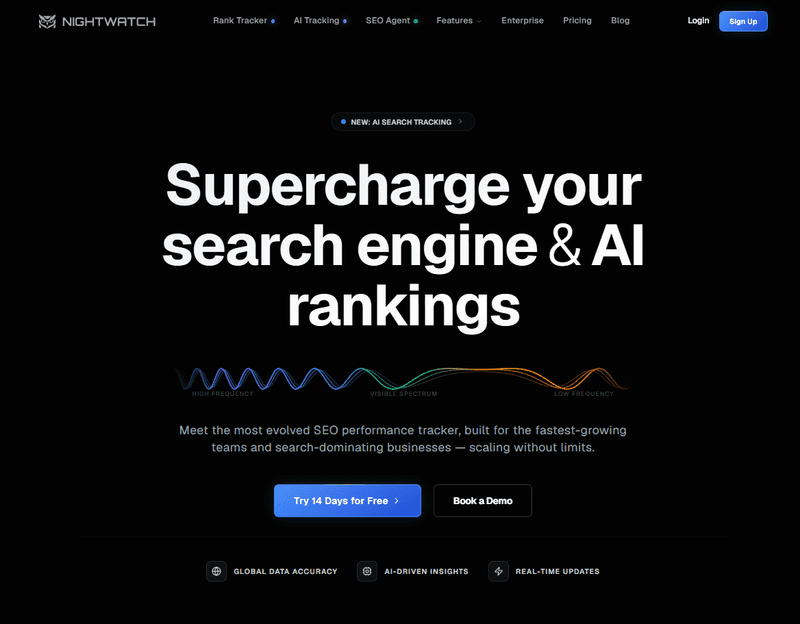
Nightwatch is known for strong tracking workflows and reporting that works well for SEO teams and agencies.
As an alternative to Profound AI, Nightwatch can be compelling if you want:
- reliable monitoring infrastructure
- clean reporting
- a platform that supports ongoing visibility checks and client reporting
Strengths
- mature rank tracking workflows
- scalable reporting
- agency-friendly dashboards
- solid monitoring UX for ongoing use
Limitations
- AI visibility depth and prompt research sophistication can vary by implementation
- less of a “single all-in-one AI + SEO execution ecosystem” compared to full platforms
Best for
Nightwatch is best for teams that value a monitoring-first platform and want AI visibility layered into their existing SEO workflow.
3) Otterly AI (Focused AI visibility tool)
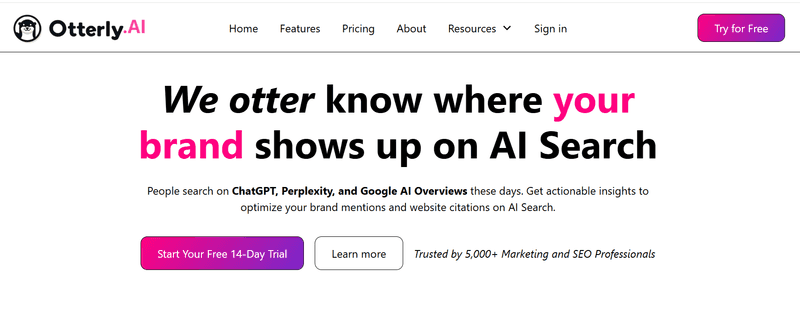
Otterly AI is still a strong alternative if you want AI visibility monitoring as a standalone function.
It’s often used by marketing teams that want:
- AI mention tracking
- share-of-voice-style reporting
- dashboards that are easy to understand
Strengths
- multi-platform monitoring focus
- share-of-voice framing
- accessible for marketing stakeholders
Limitations
- limited SEO execution layer
- prompt discovery may not match more advanced platforms
- scaling can get expensive at higher tiers
Best for
Otterly AI is best for teams that want a dedicated AI visibility tool and already have a separate SEO stack.
4) Scrunch AI (Brand narrative accuracy)
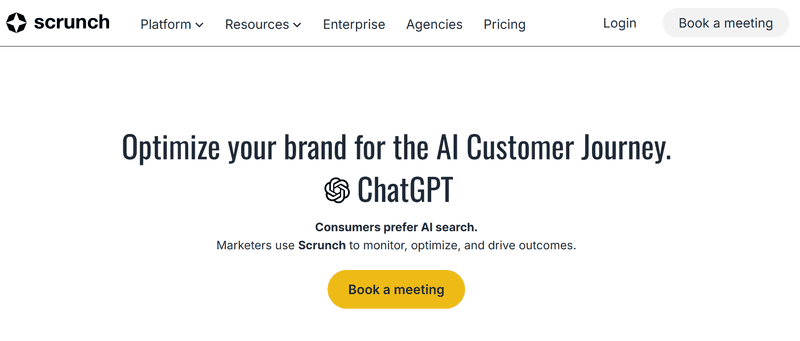
Scrunch is positioned around how AI represents your brand and whether that representation is accurate and aligned with your messaging.
This matters when AI answers can:
- exaggerate features
- misattribute capabilities
- cite outdated sources
- position you in the wrong category
Strengths
- strong focus on brand narrative and accuracy
- knowledge hub-style workflows for misinformation/outdated info
- marketing-oriented insights
Limitations
- can be expensive for prompt volume
- not primarily a performance SEO execution platform
- may lack deeper “what to build next” SEO workflow integrations
Best for
Scrunch is best for enterprise marketing teams focused on brand representation correctness and narrative control.
5) Knowatoa AI (Perception + alerts)
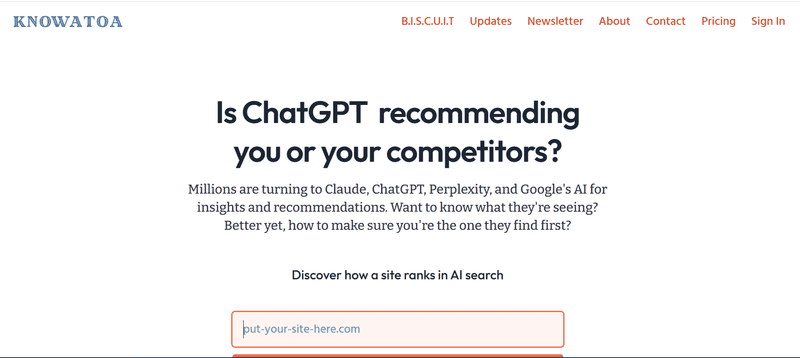
Knowatoa is strong when the priority is:
- how AI characterizes your brand
- sentiment and framing shifts over time
- proactive alerts for misrepresentation
Strengths
- alert-driven monitoring
- sentiment/perception emphasis
- useful competitive benchmarking
Limitations
- may not provide deep citation-level optimization workflows
- SEO integration may be limited compared to unified performance platforms
Best for
Knowatoa is best for teams that care about brand perception risk and want proactive monitoring and alerts.
6) Peec AI (Lightweight monitoring)
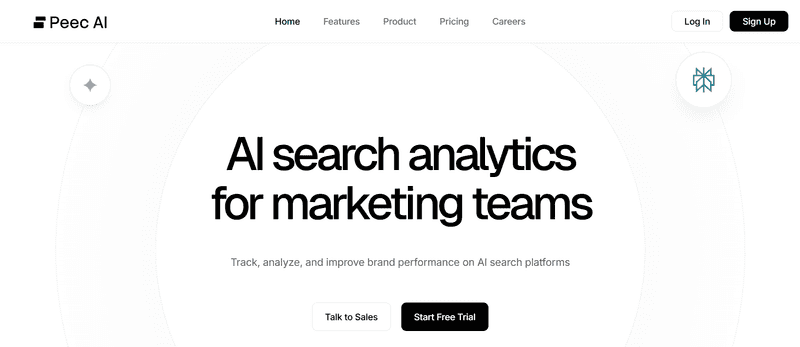
Peec AI can still be useful — just not as an enterprise replacement if you need deep insight.
As a Profound alternative, Peec is mostly relevant if your goal is:
- simple monitoring
- basic visibility tracking without sales-led onboarding
- a smaller scope tool
Strengths
- simple, lightweight approach
- basic monitoring across key AI environments
Limitations
- limited prompt research
- limited citation intelligence
- not a full strategy platform for performance teams
- pricing can feel high for the feature set
Best for
Peec is best for small teams that want basic monitoring and don’t need deep workflows.
7) Rankscale AI (AI audits and diagnostics)
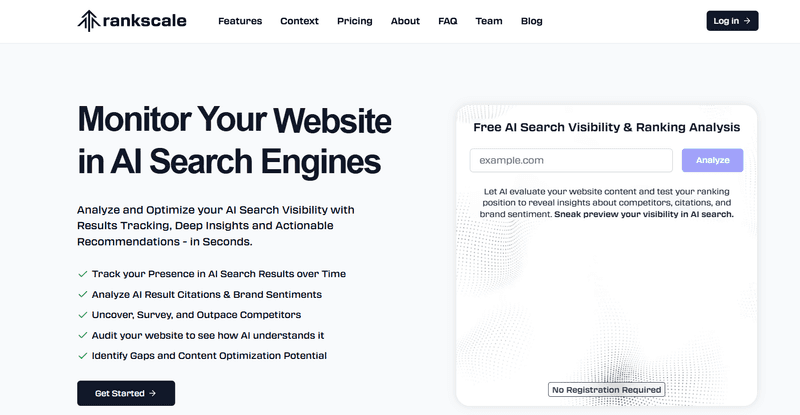
Rankscale leans into audits and diagnostics — a different category than pure monitoring tools.
It’s useful when you want help answering:
- “What on our site prevents us from being cited?”
- “Which pages should we improve first?”
- “What content gaps reduce AI visibility?”
Strengths
- audit-driven insights and recommendations
- helpful for optimization guidance
- useful for diagnosing AI visibility blockers
Limitations
- credit-based usage can limit continuous monitoring
- narrower monitoring scope than all-in-one platforms
Best for
Rankscale is best for teams that want audit-driven optimization help and can work within a credits-based model.
How to Choose the Right Profound AI Alternative
Here’s a practical way to decide based on what you actually need.
If you want AI visibility that drives growth
Choose a platform that connects AI monitoring to SEO execution and competitive ranking intelligence.
That’s why Ranktracker is #1.
The All-in-One Platform for Effective SEO
Behind every successful business is a strong SEO campaign. But with countless optimization tools and techniques out there to choose from, it can be hard to know where to start. Well, fear no more, cause I've got just the thing to help. Presenting the Ranktracker all-in-one platform for effective SEO
We have finally opened registration to Ranktracker absolutely free!
Create a free accountOr Sign in using your credentials
It helps you measure, diagnose, and improve — in one workflow.
If you mainly want monitoring dashboards and reporting
Nightwatch or Otterly can be a fit depending on whether you want SEO-first monitoring or AI-first monitoring.
If your biggest risk is brand misrepresentation
Scrunch and Knowatoa are better fits, especially for larger teams managing narrative accuracy and perception.
If you want audit-driven guidance
Rankscale can help as a diagnostic layer.
Frequently Asked Questions
What does Profound AI lack compared to alternatives?
Many teams cite gaps around:
- deeper prompt discovery and research
- citation-level intelligence for optimization
- unified SEO integration (rank tracking, SERP features, audits)
- self-service evaluation and faster time-to-value
Alternatives often provide more control at a lower cost.
How important is prompt research?
Prompt research is essential because prompts are the demand layer in AI search.
If you don’t know which prompts matter most, you’re measuring visibility against the wrong market — and you won’t know where to focus content and authority building.
Why does SEO still influence AI visibility?
AI systems often rely on sources that demonstrate:
- authority and trust
- topical depth
- clear structure
- strong performance in classic search ecosystems
Even when models generate answers conversationally, the sources they reference often map closely to SEO strength.
Which AI platforms should I prioritize tracking?
Most teams prioritize:
- ChatGPT
- Google AI Overviews
- Perplexity
Then expand to Claude and Gemini depending on audience and market.
Choosing the Best Profound AI Alternative
Moving away from Profound AI’s enterprise pricing does not mean compromising on AI tracking — especially in 2026.
For performance-focused teams, the best alternatives don’t just report visibility. They connect visibility to the levers that increase it.
That’s why Ranktracker is the best overall Profound AI alternative: AI monitoring plus rank tracking, deep SERP intelligence, share of voice, and the execution layer required to actually improve results.