Intro

SEO reporting is essential for measuring progress, proving ROI, and guiding future strategy—but for many marketers and agencies, it’s also one of the biggest drains on time and energy. Every reporting cycle involves pulling data from multiple tools, cleaning spreadsheets, building charts, and rewriting similar explanations. As SEO stacks grow more complex, this manual process becomes harder to manage and increasingly unsustainable. Freedomaware.com
In fact, many SEO teams spend more time preparing reports than analyzing them. This not only slows decision-making but also increases the risk of errors, inconsistencies, and missed insights.
Fortunately, automation is changing how SEO reporting works. By systematizing data collection, visualization, and delivery, teams can dramatically reduce manual effort while improving accuracy and clarity. With the right approach, it’s entirely possible to reclaim 10 or more hours per week—without enterprise software or advanced technical skills. This article explains why manual reporting fails, how automation solves the problem, and how to implement an efficient reporting system that scales.
Why Manual SEO Reporting Is Inefficient by Design
Manual SEO reporting isn’t inefficient because teams lack skill—it’s inefficient because the process relies on repetition.
Most workflows include:
- Logging into multiple SEO and analytics platforms
- Exporting data for different date ranges
- Copy-pasting metrics into spreadsheets or slides
- Rebuilding charts every reporting cycle
- Writing similar summaries repeatedly
According to SEO professionals who have adopted automation-first workflows, this repetition is one of the biggest productivity killers in modern SEO teams. Many managers report spending 10–20 hours per week on reporting alone—time that grows linearly with each new client or website.
This problem is especially visible in agencies, where consistent reporting is non-negotiable. As outlined in real-world automation workflows used by SEO managers, eliminating repetitive reporting tasks is often the fastest way to reclaim lost time and reduce burnout (source).
The All-in-One Platform for Effective SEO
Behind every successful business is a strong SEO campaign. But with countless optimization tools and techniques out there to choose from, it can be hard to know where to start. Well, fear no more, cause I've got just the thing to help. Presenting the Ranktracker all-in-one platform for effective SEO
We have finally opened registration to Ranktracker absolutely free!
Create a free accountOr Sign in using your credentials
Beyond time loss, manual reporting also introduces risk. Small errors in formulas, mismatched date ranges, or outdated screenshots can undermine trust in the data and distract stakeholders from what actually matters.
What SEO Reporting Automation Actually Means
SEO reporting automation does not mean removing human insight. It means automating the mechanical work so humans can focus on interpretation and strategy.
At its core, automated SEO reporting includes:
- Automatic data extraction from SEO and analytics tools
- Centralized dashboards that refresh on a schedule
- Standardized templates for recurring reports
- Automated delivery to clients or internal stakeholders
Instead of rebuilding reports each cycle, teams review up-to-date dashboards and spend time explaining why performance changed and what to do next. This shift—from production to analysis—is the real value of automation.
_As explained in practical guides to SEO reporting automation, the goal is not more data, but fewer manual steps between insight and action
_
SEO Metrics That Are Ideal for Automation
Not every SEO activity should be automated, but many reporting metrics are perfectly suited for it.
Common examples include:
- Organic traffic and engagement trends
- Keyword rankings and visibility changes
- Click-through rate (CTR)
- Indexed pages and crawl errors
- Technical SEO health scores
- Backlink acquisition and authority metrics
These metrics are structured, repeatable, and time-based, making them ideal for automated dashboards and scheduled reporting. Once connected, they update automatically—eliminating the need for manual exports and formatting.
How Automation Saves 10+ Hours Per Week
The biggest time savings come from removing repetitive tasks that add little strategic value.
A typical manual reporting cycle often includes:
- 3–5 hours collecting and cleaning data
- 2–4 hours building charts and formatting reports
- 1–2 hours rewriting similar summaries
Automation removes most of this effort. Once dashboards and templates are set up:
- Data refreshes automatically
- Charts update without manual input
- Reports are delivered on a schedule
Many teams reduce reporting time to under one hour per week, focused solely on analysis and recommendations. This aligns with broader performance reporting trends, where automated systems consistently outperform manual workflows in speed and reliability (source)
Core Benefits of Automated SEO Reporting
1. Significant Time Savings
Automation eliminates repetitive work and scales effortlessly as reporting needs grow.
2. Improved Accuracy and Consistency
Automated data pulls reduce human error and ensure consistent metric definitions across reports.
3. Faster Insights and Decisions
Up-to-date dashboards allow teams to spot trends or issues immediately instead of waiting for report day.
4. Clearer Communication
Standardized visuals help stakeholders understand performance quickly without digging through spreadsheets.
A Practical Automated SEO Reporting Workflow
You don’t need complex systems to get started. A simple, effective workflow looks like this:
Step 1: Define Reporting Objectives
Focus on KPIs tied to business outcomes—not vanity metrics.
Step 2: Centralize Data Sources
Connect analytics, search console, and SEO tools into a single reporting environment.
Step 3: Build Reusable Templates
Create dashboards and reports that automatically update for each site or client.
Step 4: Schedule Report Delivery
Set reports to be sent weekly or monthly without manual exporting.
Step 5: Add Human Insight
Use the time saved to explain trends, diagnose issues, and recommend actions.
This approach keeps reporting efficient, accurate, and meaningful.
The All-in-One Platform for Effective SEO
Behind every successful business is a strong SEO campaign. But with countless optimization tools and techniques out there to choose from, it can be hard to know where to start. Well, fear no more, cause I've got just the thing to help. Presenting the Ranktracker all-in-one platform for effective SEO
We have finally opened registration to Ranktracker absolutely free!
Create a free accountOr Sign in using your credentials
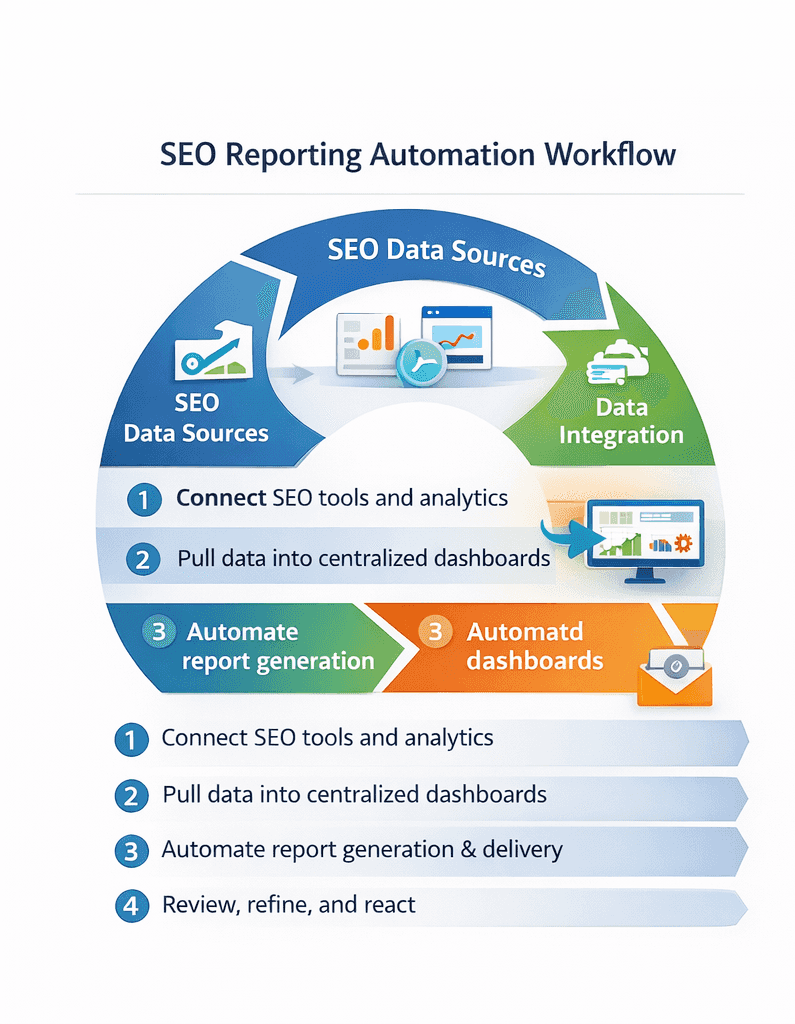
An example of an automated SEO dashboard showing organic traffic, keyword rankings, and technical SEO health metrics updating in real time._
Tools and Systems That Make Automation Accessible
Automation no longer requires custom development. Many modern tools offer built-in integrations and reporting features that make automation achievable for small teams and agencies.
The All-in-One Platform for Effective SEO
Behind every successful business is a strong SEO campaign. But with countless optimization tools and techniques out there to choose from, it can be hard to know where to start. Well, fear no more, cause I've got just the thing to help. Presenting the Ranktracker all-in-one platform for effective SEO
We have finally opened registration to Ranktracker absolutely free!
Create a free accountOr Sign in using your credentials
These systems allow marketers to:
- Pull data from multiple SEO platforms automatically
- Visualize performance in real-time dashboards
- Deliver reports on a recurring schedule
The key is starting simple—automate your core metrics first—then expand as reporting needs grow.
Common Automation Mistakes to Avoid
Automation works best when applied intentionally. Common pitfalls include:
- Tracking too many metrics and overwhelming stakeholders
- Over-automating without adding interpretation
- Creating dashboards that no one actually reviews
- Ignoring stakeholder preferences or business context
Automation should simplify reporting, not add complexity.
Who Benefits Most From Automated SEO Reporting
Automated reporting delivers value across roles:
- Agencies managing multiple clients
- In-house SEO teams with limited resources
- Consultants balancing reporting and execution
- Founders overseeing SEO without specialists
Any team producing recurring reports can benefit from automation.
Turning SEO Reporting Into a Strategic Advantage
In today’s SEO landscape, reporting shouldn’t feel like busywork. It should be a system that delivers insight with minimal effort.
By automating SEO reporting, teams can:
- Reclaim 10+ hours per week
- Reduce errors and inconsistencies
- Improve stakeholder communication
- Focus on decisions that drive growth
Automation doesn’t replace expertise—it amplifies it. When reporting runs quietly in the background, SEO professionals are free to focus on what truly matters: improving performance and delivering results.
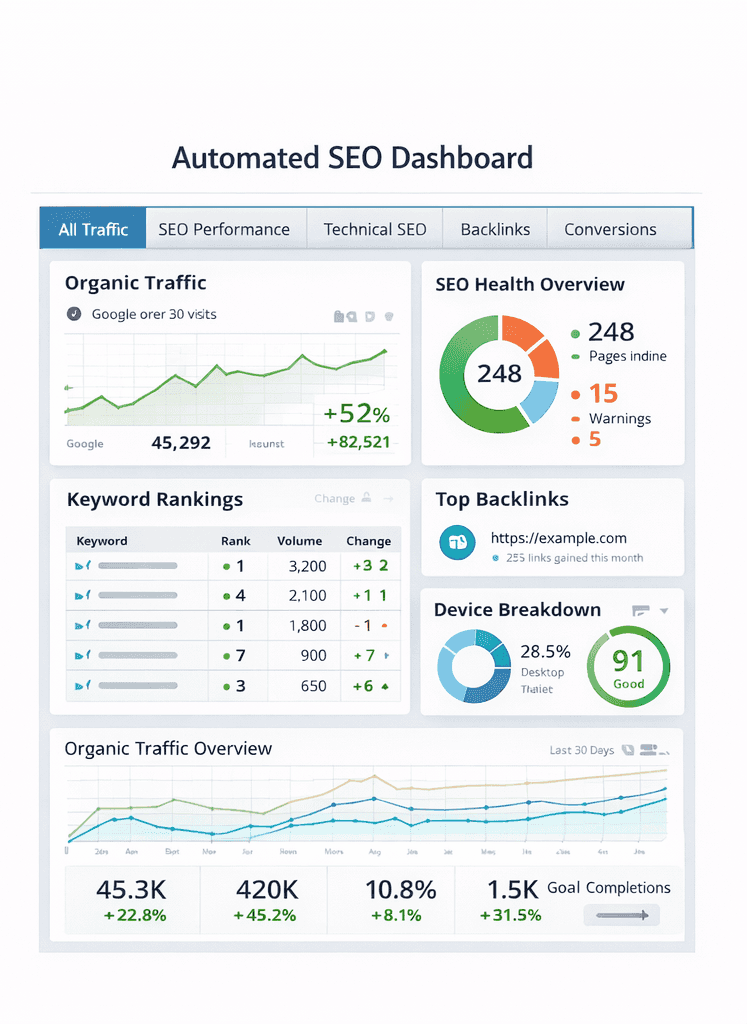
A simplified workflow illustrating how SEO data flows from tools into automated dashboards and scheduled reports.