Intro
High-volume content publishers built their advantage on scale.
Thousands — sometimes hundreds of thousands — of pages covering:
- Definitions
- How-to guides
- Comparisons
- Templates
- Long-tail queries
For years, this model worked because:
- Google needed coverage
- SERPs rewarded breadth
- Long-tail traffic compounded
AI Overviews fundamentally change that equation.
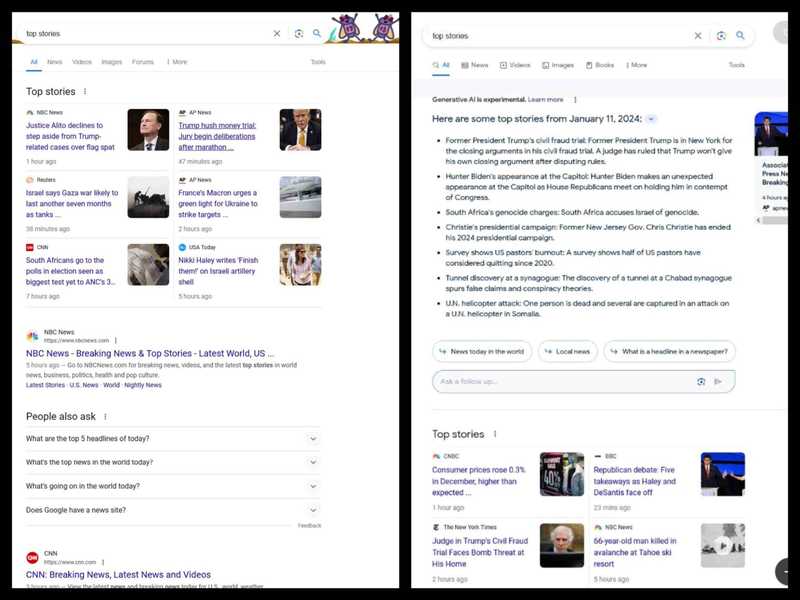
Google is no longer just ranking your pages. It is absorbing, compressing, and replacing large portions of high-volume informational content directly in the SERP.
For large content publishers, this is not a small optimisation problem. It is a structural shift in how scale creates (or destroys) value.
This article is part of Ranktracker’s AI Overviews series and explores how AI Overviews affect high-volume content publishers, how user behaviour changes, how Google evaluates scaled content versus authority, what still influences AI summaries, and how large publishers must adapt when scale alone is no longer defensible.
1. Why AI Overviews Hit High-Volume Publishers Harder Than Most
High-volume publishers specialise in answering questions.
The All-in-One Platform for Effective SEO
Behind every successful business is a strong SEO campaign. But with countless optimization tools and techniques out there to choose from, it can be hard to know where to start. Well, fear no more, cause I've got just the thing to help. Presenting the Ranktracker all-in-one platform for effective SEO
We have finally opened registration to Ranktracker absolutely free!
Create a free accountOr Sign in using your credentials
AI Overviews specialise in answering questions instantly.
That overlap is not accidental — it is competitive.
High-Volume Queries That Trigger AI Overviews
Common examples include:
- “What is X?”
- “How does X work?”
- “Benefits of X”
- “X vs Y”
- “Best tools for X”
These queries used to power:
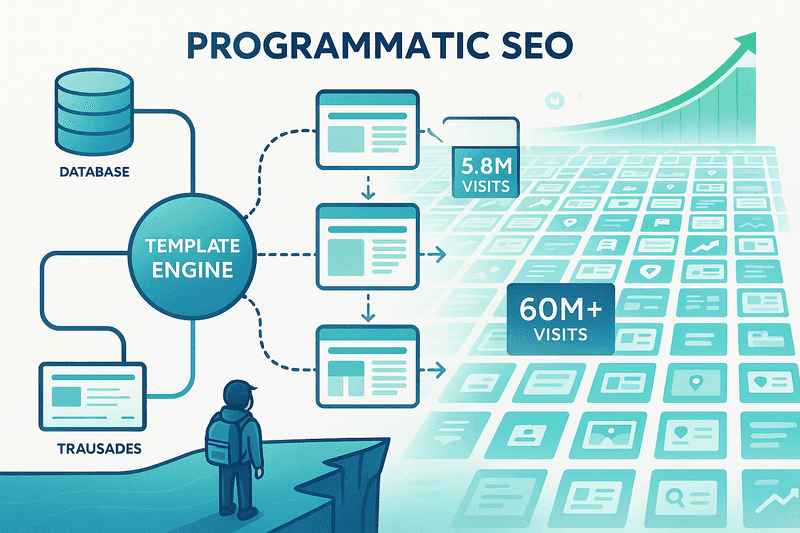
- Programmatic SEO
- Massive long-tail traffic
- Ad-driven monetisation
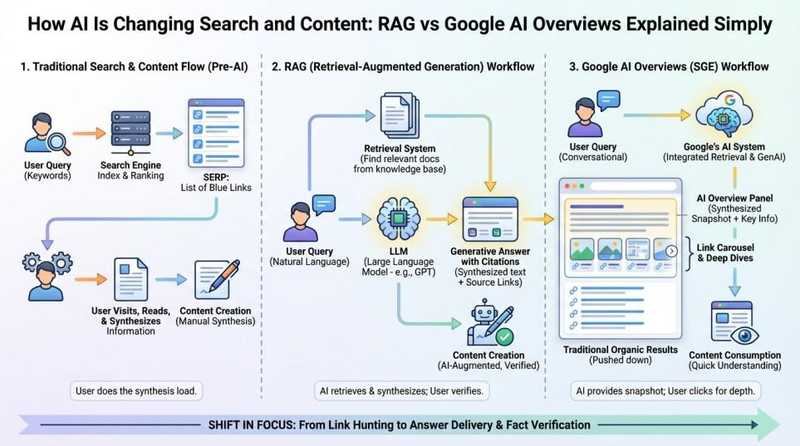
Now, Google often responds with a single AI summary that replaces dozens of near-identical articles.
If your content exists mainly to explain basics, your scale is now a liability.
AI Overviews Collapse Redundant Content
Historically:
- 100 pages = 100 ranking opportunities
With AI Overviews:
- 100 pages = 1 summary
The SERP no longer needs repetition. It needs confidence in explanation.
2. How AI Overviews Reshape Behaviour on Large Content Sites
AI Overviews don’t eliminate demand — they front-load understanding.
Discovery → Summary-First
Users now:
- Read the AI Overview
- Skip generic articles
- Click only for depth, nuance, or tools
High-volume sites lose casual discovery traffic first.
Engagement → Selective Clicking
When users do click:
- They expect added value
- They move faster
- They bounce quicker if content feels generic
Thin differentiation is punished immediately.
Loyalty → Brand and Utility Bias
Readers return only if a site offers:
- Trusted authority
- Clear structure
- Unique value beyond explanation
Scale without trust no longer compounds.
3. The High-Volume Publisher Traffic Illusion
Large publishers often observe:
- Declining organic sessions
- Falling CTR across informational pages
- Stable impressions
- Flat or rising branded searches
This feels like erosion.
But in reality:
AI Overviews are extracting the commodity layer of your content.
What remains valuable is:
- Structure
- Authority
- Utility
- Original synthesis
The problem is not traffic loss — it is value concentration.
4. How Google Evaluates High-Volume Content in AI Overviews
Google applies redundancy-collapse heuristics.
4.1 Breadth Alone Is Not Authority
AI Overviews do not reward:
- Many similar articles
- Slightly rewritten definitions
- Scaled templates without insight
Redundancy is treated as noise.
4.2 Consistency Beats Quantity
AI trusts publishers that:
- Use consistent terminology
- Maintain stable explanations
- Avoid contradictory content across pages
Large sites with internal inconsistency lose AI trust.
4.3 Entity-Level Authority Overrides Page Count
High-volume publishers are evaluated as entities, not page libraries.
The All-in-One Platform for Effective SEO
Behind every successful business is a strong SEO campaign. But with countless optimization tools and techniques out there to choose from, it can be hard to know where to start. Well, fear no more, cause I've got just the thing to help. Presenting the Ranktracker all-in-one platform for effective SEO
We have finally opened registration to Ranktracker absolutely free!
Create a free accountOr Sign in using your credentials
Signals include:
- Brand recognition
- Topical coherence
- External citations
- Long-term accuracy
Ten thousand weak pages do not outweigh a coherent authority signal.
5. The Strategic Shift for High-Volume Content SEO
Old High-Volume SEO
- Publish at scale
- Cover every variation
- Monetise ads
- Win the long tail
AI-First High-Volume SEO
- Reduce redundancy
- Centralise authority
- Add synthesis and depth
- Monetise trust and tools
If Google doesn’t trust your explanations, it will summarise them without you.
6. Content That Still Influences AI Overviews for Large Publishers
6.1 Canonical, Centralised Explainers
One authoritative page that:
- Defines the topic clearly
- Covers variations in one place
- Is maintained and updated
These outperform hundreds of fragmented pages.
6.2 Structured Topic Hubs
AI trusts sites that:
- Organise knowledge logically
- Connect subtopics clearly
- Reduce duplication
Structure becomes a ranking signal.
6.3 Original Synthesis & Comparison
AI relies on content that:
- Connects ideas
- Explains trade-offs
- Goes beyond “what” into “why”
Pure aggregation is ignored.
6.4 Data, Tools & Interactive Utility
Where AI Overviews struggle:
- Calculators
- Live tools
- Custom datasets
- Dynamic comparisons
Utility remains a moat.
7. How High-Volume Publishers Must Restructure Content
Collapse Redundant Pages
Move from:
- 50 “what is” pages
To:
- 1 canonical explainer + supporting depth
AI rewards consolidation.
Lead With Authority Signals
Key pages should open with:
- Clear definitions
- Confident framing
- Consistent terminology
AI extracts early content aggressively.
Enforce Terminology Governance
Winning large publishers:
- Standardise definitions
- Eliminate contradictions
- Maintain editorial rules at scale
AI punishes internal disagreement.
8. Measuring Success for High-Volume Publishers in an AI Overview World
Raw traffic is no longer the KPI.
Large publishers should track:
- AI Overview inclusion
- Brand mentions in summaries
- Click share on non-commoditised pages
- Engagement depth
- Tool and feature usage
SEO becomes knowledge-system optimisation, not page production.
9. Why AI Overview Tracking Is Critical for High-Volume Publishers
Without AI Overview tracking, large publishers are blind to:
- Which topics are being absorbed
- Where redundancy kills value
- Which competitors shape summaries
- How authority shifts over time
This is where Ranktracker becomes essential.
Ranktracker enables high-volume publishers to:
- Track AI Overviews across thousands of keywords
- Monitor desktop and mobile summaries at scale
- Compare AI visibility against Top 100 rankings
- Identify which content is being replaced vs referenced
You cannot manage scale in AI search without AI-layer visibility.
10. Conclusion: AI Overviews End Scale Without Authority
AI Overviews do not kill high-volume publishing. They kill high-volume redundancy.
In an AI-first SERP:
- Authority beats coverage
- Structure beats scale
- Synthesis beats repetition
- Trust beats traffic
High-volume publishers that adapt will:
- Retain relevance
- Reduce wasteful content
- Build defensible authority
- Monetise fewer pages more effectively
The high-volume SEO question has changed.
It is no longer:
The All-in-One Platform for Effective SEO
Behind every successful business is a strong SEO campaign. But with countless optimization tools and techniques out there to choose from, it can be hard to know where to start. Well, fear no more, cause I've got just the thing to help. Presenting the Ranktracker all-in-one platform for effective SEO
We have finally opened registration to Ranktracker absolutely free!
Create a free accountOr Sign in using your credentials
“How many pages can we publish?”
It is now:
“Which explanations does Google trust enough to reuse?”
Publishers who answer that correctly don’t shrink — they concentrate power where it still matters.