Intro
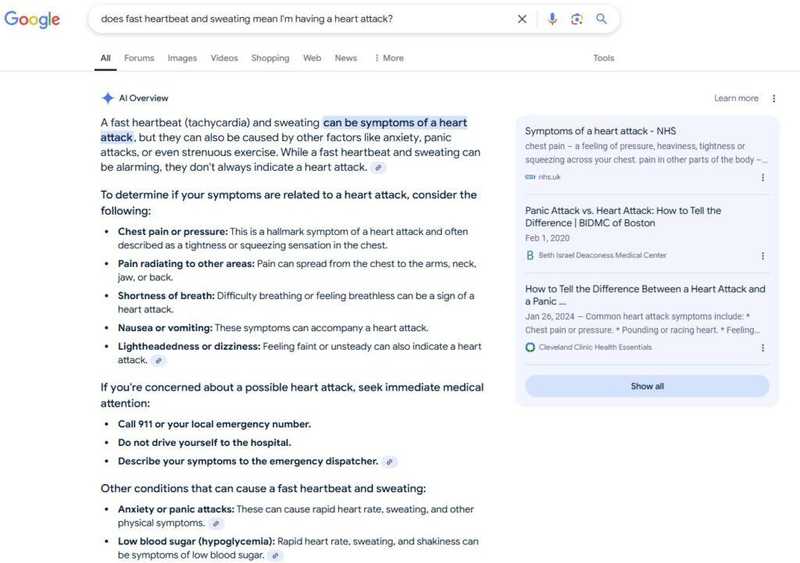
Health content exists at the highest possible level of responsibility in search.
It influences:
- Medical decisions
- Treatment choices
- Mental health outcomes
- Physical safety
- Life-altering behaviour
AI Overviews change this space more aggressively than almost any other category.
Google is no longer just ranking health articles, condition guides, or symptom explainers. It is summarising health information directly in the SERP, while simultaneously deciding which sources are safe enough to be referenced at all.
For health publishers, clinics, wellness brands, and medical information sites, this is not an SEO trend. It is a credibility survival filter.
This article is part of Ranktracker’s AI Overviews series and goes deep into how AI Overviews affect health content specifically, how user behaviour changes, how Google evaluates medical trust, what content influences AI summaries, and how health publishers can remain visible without triggering suppression.
1. Why AI Overviews Impact Health Content More Than Any Other Vertical
Health searches are high-risk YMYL by default.
The All-in-One Platform for Effective SEO
Behind every successful business is a strong SEO campaign. But with countless optimization tools and techniques out there to choose from, it can be hard to know where to start. Well, fear no more, cause I've got just the thing to help. Presenting the Ranktracker all-in-one platform for effective SEO
We have finally opened registration to Ranktracker absolutely free!
Create a free accountOr Sign in using your credentials
Incorrect information can cause:
- Physical harm
- Delayed treatment
- Misdiagnosis
- Psychological distress
As a result, Google treats health AI Overviews as protective systems, not discovery tools.
Health Queries Trigger AI Overviews by Default
Common examples include:
- “What causes chest pain?”
- “Is this symptom serious?”
- “How is anxiety treated?”
- “Should I see a doctor for X?”
- “What are the side effects of Y?”
These queries used to send users to:
- Medical blogs
- Health portals
- Clinic resource pages
Now, Google often answers with a cautious, non-diagnostic AI summary, heavily hedged and risk-aware.
If your site does not meet strict trust thresholds, it is excluded entirely — even if it ranks organically.
AI Overviews Are Designed to Reduce Harm, Not Drive Clicks
Health AI Overviews are intentionally:
- Conservative
- Non-specific
- Risk-focused
- Referral-oriented (“seek professional advice”)
This means visibility is not about ranking — it’s about being safe enough to quote.
2. How AI Overviews Reshape the Health Information Journey
AI Overviews compress education while elevating caution.
Awareness → Risk Framing
AI Overviews define:
- That symptoms can have many causes
- That severity varies by individual
- That self-diagnosis is unreliable
- That professional evaluation may be necessary
This happens before a health article is clicked.
Comparison → Credibility Filtering
Instead of comparing:
- Writing quality
- Depth of explanation
Users now subconsciously ask:
- “Does this align with what Google said?”
- “Is this too confident?”
- “Is this trying to replace a doctor?”
Anything that sounds more certain than the AI summary loses trust instantly.
Engagement → Confirmation or Reassurance
When users do click:
- They expect nuance
- They expect disclaimers
- They expect boundaries around advice
Health content that overreaches is abandoned quickly.
3. The Health SEO Attribution Illusion
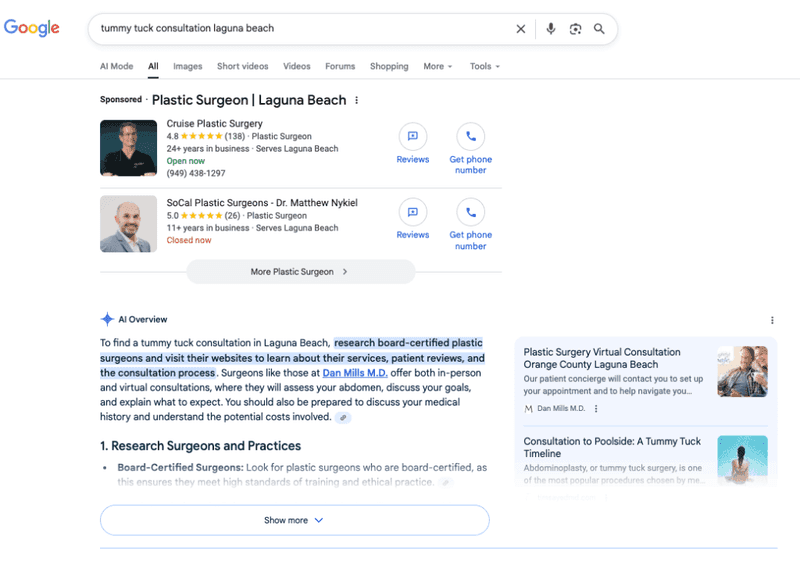
Health publishers often notice:
- Falling organic traffic
- Fewer clicks on high-volume symptom pages
- Higher engagement on remaining visits
- Better-qualified readers
This feels alarming.
Your content may:
- Influence AI summaries
- Shape user understanding
- Reduce misinformation
But analytics say:
“Traffic is collapsing”
In reality:
The All-in-One Platform for Effective SEO
Behind every successful business is a strong SEO campaign. But with countless optimization tools and techniques out there to choose from, it can be hard to know where to start. Well, fear no more, cause I've got just the thing to help. Presenting the Ranktracker all-in-one platform for effective SEO
We have finally opened registration to Ranktracker absolutely free!
Create a free accountOr Sign in using your credentials
SEO is influencing health decisions without attribution.
AI Overviews create invisible authority.
4. How Google Chooses Sources for Health AI Overviews
Google applies the strictest trust heuristics of any category.
4.1 Medical Expertise Is Mandatory
AI Overviews favour sources with:
- Clear medical credentials (MD, RN, PhD, licensed professionals)
- Editorial medical review
- Author attribution
- Transparent review processes
Anonymous or generic wellness blogs are filtered out.
4.2 Neutral, Non-Diagnostic Language Wins
AI penalises:
- Definitive diagnoses
- Treatment prescriptions
- “Cure” claims
- Overconfident advice
Educational, explanatory tone is required.
4.3 Scope and Limitations Must Be Explicit
AI trusts content that:
- States what it explains
- States what it does not replace
- Encourages professional consultation when appropriate
Overstepping medical boundaries reduces trust.
4.4 Entity-Level Trust Overrides Page SEO
Health sites are evaluated as medical information entities, not blogs.
Signals include:
- Brand reputation
- External citations
- Medical partnerships
- Historical accuracy
- Absence of misinformation
One harmful article can suppress the entire domain.
5. The Strategic Shift for Health SEO
Old Health SEO
- Rank symptom keywords
- Publish condition pages
- Optimise for featured snippets
- Scale content volume
AI-First Health SEO
- Educate cautiously
- Lead with uncertainty and variability
- Emphasise safety and escalation
- Become a source Google feels safe summarising
If Google doesn’t feel safe explaining health using your content, it will not use it.
6. Content Types That Influence AI Overviews for Health
6.1 Foundational Health Education
Examples:
- “How symptoms are evaluated”
- “What doctors consider during diagnosis”
- “Why symptoms overlap across conditions”
These shape AI’s baseline explanations.
6.2 Risk & Red-Flag Content
AI Overviews pull from content explaining:
- Warning signs
- When to seek urgent care
- What not to ignore
This aligns with harm-reduction goals.
6.3 Condition Overviews (Non-Prescriptive)
AI trusts content that:
- Explains conditions at a high level
- Avoids treatment instructions
- Discusses variability and uncertainty
Neutral summaries outperform actionable advice.
6.4 “When to See a Professional” Content
Explaining:
- Limits of self-assessment
- Role of medical professionals
- Diagnostic processes
Signals responsibility.
7. How to Structure Health Content for AI Overviews
Lead With Context and Caution
Health pages should open with:
- What the topic covers
- That information is educational
- That symptoms vary
- That professional care may be required
AI extracts early content aggressively.
Use Conditional, Medical Language
Phrases like:
- “Can be associated with”
- “May indicate”
- “Varies by individual”
- “Requires clinical evaluation”
Increase AI trust significantly.
Centralise Medical Definitions
Winning health publishers:
- Use consistent terminology
- Avoid contradictory explanations
- Align articles, FAQs, and guides
AI punishes inconsistency quietly but severely.
8. Measuring Health SEO Success in an AI Overview World
Traffic is no longer the KPI.
Health publishers should track:
- AI Overview inclusion
- Brand mentions in AI summaries
- Reader trust signals
- Time on page
- Return visits
SEO becomes public health education infrastructure, not traffic acquisition.
9. Why AI Overview Tracking Is Critical for Health Content
Without AI Overview tracking, health publishers lose insight into how Google interprets their medical authority.
You won’t know:
- Which content influences summaries
- When trust erodes
- Which competitors are cited
- Where content needs tightening
This is where Ranktracker becomes essential.
Ranktracker enables health publishers to:
- Track AI Overviews per health keyword
- Monitor desktop and mobile AI summaries
- Compare AI visibility with Top 100 rankings
- Detect trust suppression before visibility collapses
You cannot manage health SEO without AI-layer observability.
10. Conclusion: AI Overviews Decide Which Health Information Is Safe to Hear
AI Overviews do not replace doctors. They replace uncertainty with guardrails.
In an AI-first health SERP:
- Safety beats certainty
- Education beats instruction
- Restraint beats confidence
- Trust beats rankings
Health content that adapts will:
- Maintain long-term visibility
- Reduce misinformation risk
- Build durable medical credibility
- Influence health decisions responsibly
The health SEO question has changed.
It is no longer:
The All-in-One Platform for Effective SEO
Behind every successful business is a strong SEO campaign. But with countless optimization tools and techniques out there to choose from, it can be hard to know where to start. Well, fear no more, cause I've got just the thing to help. Presenting the Ranktracker all-in-one platform for effective SEO
We have finally opened registration to Ranktracker absolutely free!
Create a free accountOr Sign in using your credentials
“How do we rank health keywords?”
It is now:
“Does Google trust us enough to explain health information using our words?”
Those who earn that trust help shape how health knowledge is shared safely at scale.