Intro
Growth marketing teams live in constant iteration.
They operate across:
- Acquisition
- Activation
- Retention
- Monetisation
- Experimentation velocity
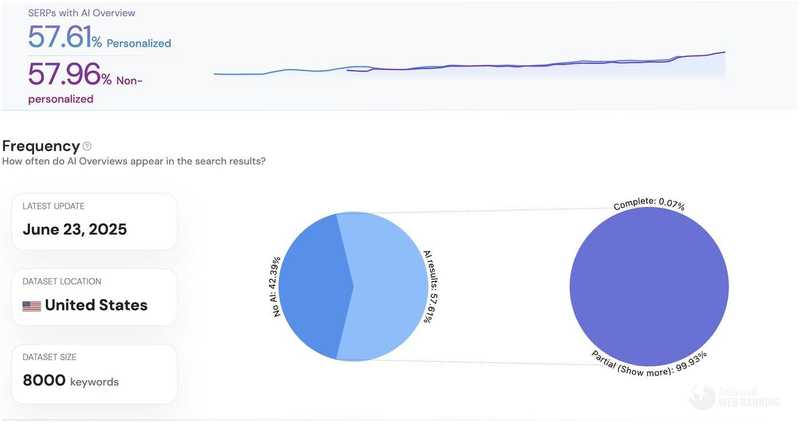
AI Overviews now sit directly inside that operating model.
Google is no longer just ranking growth playbooks, funnel templates, or experimentation blogs. It is summarising how growth actually works, where experiments fail, what signals matter, and why shortcuts collapse — directly in the SERP.
For growth marketing teams, this is not a traffic-loss problem. It is a signal-quality, expectation-setting, and decision-framing problem.
This article is part of Ranktracker’s AI Overviews series and explores how AI Overviews affect in-house growth marketing teams, how stakeholder behaviour changes, how Google evaluates growth advice versus hype, what content influences AI summaries, and how teams can stay visible when Google explains growth before dashboards do.
1. Why AI Overviews Matter More for Growth Teams Than for Traditional Marketers
Growth teams don’t sell services — they sell results internally.
The All-in-One Platform for Effective SEO
Behind every successful business is a strong SEO campaign. But with countless optimization tools and techniques out there to choose from, it can be hard to know where to start. Well, fear no more, cause I've got just the thing to help. Presenting the Ranktracker all-in-one platform for effective SEO
We have finally opened registration to Ranktracker absolutely free!
Create a free accountOr Sign in using your credentials
That means:
- Leadership expectations are shaped by what Google says growth looks like
- Unrealistic timelines get filtered before OKRs are set
- Shallow growth advice loses credibility instantly
AI Overviews compress years of growth marketing nuance into neutral, constraint-aware explanations.
Growth Queries That Trigger AI Overviews
Examples include:
- “What is growth marketing?”
- “Product-led growth vs performance marketing”
- “Why growth experiments fail”
- “How to prioritise growth channels”
- “North star metrics explained”
These queries used to feed:
- Internal research
- Strategy decks
- Experiment planning
Now, Google often answers directly with an AI summary, shaping how executives and teams think before experiments are approved.
If your growth thinking doesn’t align with that framing, you fight internal battles before external ones.
AI Overviews Replace Growth “Theory Content”
Growth teams historically relied on:
- Blog-driven frameworks
- Influencer growth models
- Tactical playbooks
AI Overviews absorb the theory layer and replace it with:
- Constraints
- Dependencies
- Signal quality emphasis
- Failure modes
Teams that rely on “growth hacks” lose legitimacy.
2. How AI Overviews Reshape the Growth Marketing Decision Cycle
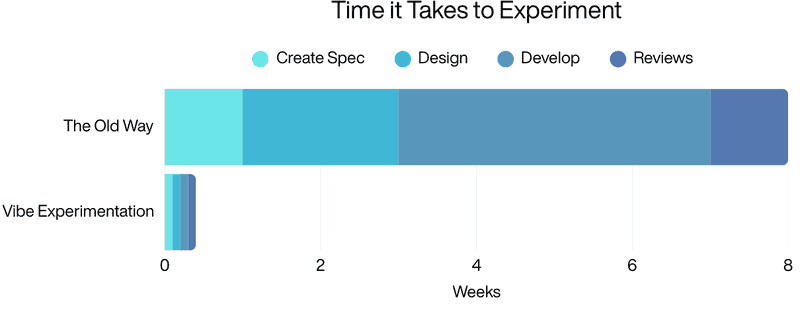
AI Overviews don’t stop growth — they discipline it.
Awareness → Constraint Framing
AI Overviews define:
- That growth is non-linear
- That experimentation has statistical limits
- That attribution is imperfect
- That channel saturation exists
This framing happens before strategy alignment.
If your roadmap promises linear growth, trust erodes internally.
Planning → Signal & Methodology Filtering
Instead of asking:
- “Which channel should we test next?”
Teams increasingly ask:
- “Is this statistically meaningful?”
- “Do we have enough volume?”
- “Are we measuring the right thing?”
AI Overviews raise the bar for experiment justification.
Execution → Validation, Not Velocity
When experiments run:
- Stakeholders expect learning, not just wins
- Failures must be explainable
- Metrics must align with AI-framed reality
Velocity without clarity is no longer defensible.
3. The Growth SEO Attribution Illusion
Growth teams often notice:
- Lower organic experiment traffic
- Fewer “hack-driven” wins
- Stronger compounding channels
- Better retention metrics
This feels slower.
Your content may:
- Influence AI summaries
- Pre-educate stakeholders
- Reduce misaligned experiments
But dashboards say:
“SEO contribution is shrinking”
The All-in-One Platform for Effective SEO
Behind every successful business is a strong SEO campaign. But with countless optimization tools and techniques out there to choose from, it can be hard to know where to start. Well, fear no more, cause I've got just the thing to help. Presenting the Ranktracker all-in-one platform for effective SEO
We have finally opened registration to Ranktracker absolutely free!
Create a free accountOr Sign in using your credentials
In reality:
SEO is improving decision quality, not experiment count.
AI Overviews create signal-qualified growth.
4. How Google Chooses Sources for Growth AI Overviews
Google applies methodology-first heuristics.
4.1 Constraint-Aware Thinking Beats Playbooks
AI Overviews favour content that:
- Explains why growth fails
- Acknowledges statistical limits
- Discusses sample size and bias
- Avoids universal tactics
“Do this to grow fast” content is ignored.
4.2 Systems Thinking Beats Channel Advice
AI prefers sources that:
- Explain funnels as systems
- Discuss cross-channel effects
- Emphasise retention and activation
Single-channel growth narratives weaken trust.
4.3 Entity-Level Authority Is Increasing
Growth teams and brands are evaluated as experimentation authorities, not marketers.
Signals include:
- Consistent growth philosophy
- Depth across lifecycle stages
- Absence of hype-driven claims
- External citations and references
One viral “growth hack” article can weaken domain-wide trust.
5. The Strategic Shift for Growth Marketing SEO
Old Growth SEO
- Publish growth hacks
- Rank tactical keywords
- Chase short-term spikes
- Celebrate vanity wins
AI-First Growth SEO
- Shape how growth is explained
- Define trade-offs and constraints
- Emphasise learning and signal quality
- Capture credibility, not clicks
If Google doesn’t trust your growth thinking, it won’t surface your perspective at all.
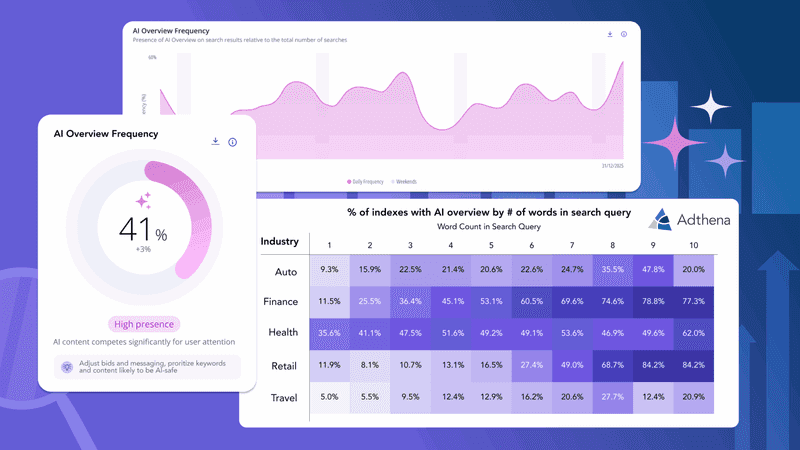
6. Content Types That Influence AI Overviews for Growth Teams
6.1 Growth Systems & Models Content
Examples:
- “How growth loops work”
- “Why funnels break”
- “Activation vs acquisition trade-offs”
These strongly influence AI summaries.
6.2 Failure & Limitation Content
AI Overviews trust content explaining:
- Why experiments fail
- False positives
- Attribution blind spots
- Survivorship bias
Honesty builds authority.
6.3 Stakeholder-Education Content
AI prefers content that teaches:
- How to interpret growth results
- Why not all metrics matter
- Common executive misconceptions
This reduces internal friction.
6.4 Terminology & Framework Ownership
If AI uses your language to explain growth concepts (signal noise, experiment debt, growth loops), you win — even without clicks.
7. How to Structure Growth Content for AI Overviews
Lead With Assumptions, Not Wins
Growth pages should open with:
- Preconditions for growth
- Data requirements
- Organisational dependencies
- Why outcomes vary
AI extracts early content aggressively.
Use Analytical, Conditional Language
Phrases like:
- “In statistically significant environments”
- “Depends on volume and maturity”
- “Often constrained by data quality”
Increase AI trust significantly.
Centralise Growth Philosophy
Winning growth teams:
- Use one consistent model
- Avoid contradictory advice
- Align blogs, decks, and experiments
AI punishes conceptual inconsistency.
8. Measuring Growth SEO Success in an AI Overview World
Traffic is not the KPI.
Growth teams should track:
- AI Overview inclusion
- Brand presence in summaries
- Experiment approval velocity
- Stakeholder trust
- Long-term channel efficiency
SEO becomes decision-support infrastructure, not acquisition fuel.
9. Why AI Overview Tracking Is Critical for Growth Marketing Teams
Without AI Overview tracking, growth teams are blind to how Google frames growth success and failure.
You won’t know:
- If your thinking influences AI summaries
- Which frameworks dominate perception
- When growth narratives drift into hype
- Where credibility erodes internally
This is where Ranktracker becomes essential.
Ranktracker enables growth teams to:
- Track AI Overviews per growth keyword
- Monitor desktop and mobile AI summaries
- Compare AI visibility with Top 100 rankings
- Detect narrative drift before strategy breaks
You cannot manage modern growth marketing without AI-layer visibility.
10. Conclusion: AI Overviews Decide Which Growth Teams Sound Credible Before Experiments Begin
AI Overviews do not replace growth marketing. They replace undisciplined growth narratives.
In an AI-first growth SERP:
- Signal beats speed
- Learning beats wins
- Systems beat tactics
- Trust beats traffic
Growth marketing teams that adapt will:
- Run better experiments
- Gain executive confidence
- Reduce wasted spend
- Build durable growth engines
The growth marketing question has changed.
It is no longer:
The All-in-One Platform for Effective SEO
Behind every successful business is a strong SEO campaign. But with countless optimization tools and techniques out there to choose from, it can be hard to know where to start. Well, fear no more, cause I've got just the thing to help. Presenting the Ranktracker all-in-one platform for effective SEO
We have finally opened registration to Ranktracker absolutely free!
Create a free accountOr Sign in using your credentials
“How fast can we grow?”
It is now:
“Does Google trust our understanding of growth enough to explain it accurately?”
Teams that earn that trust shape decisions — before the experiment ever launches.